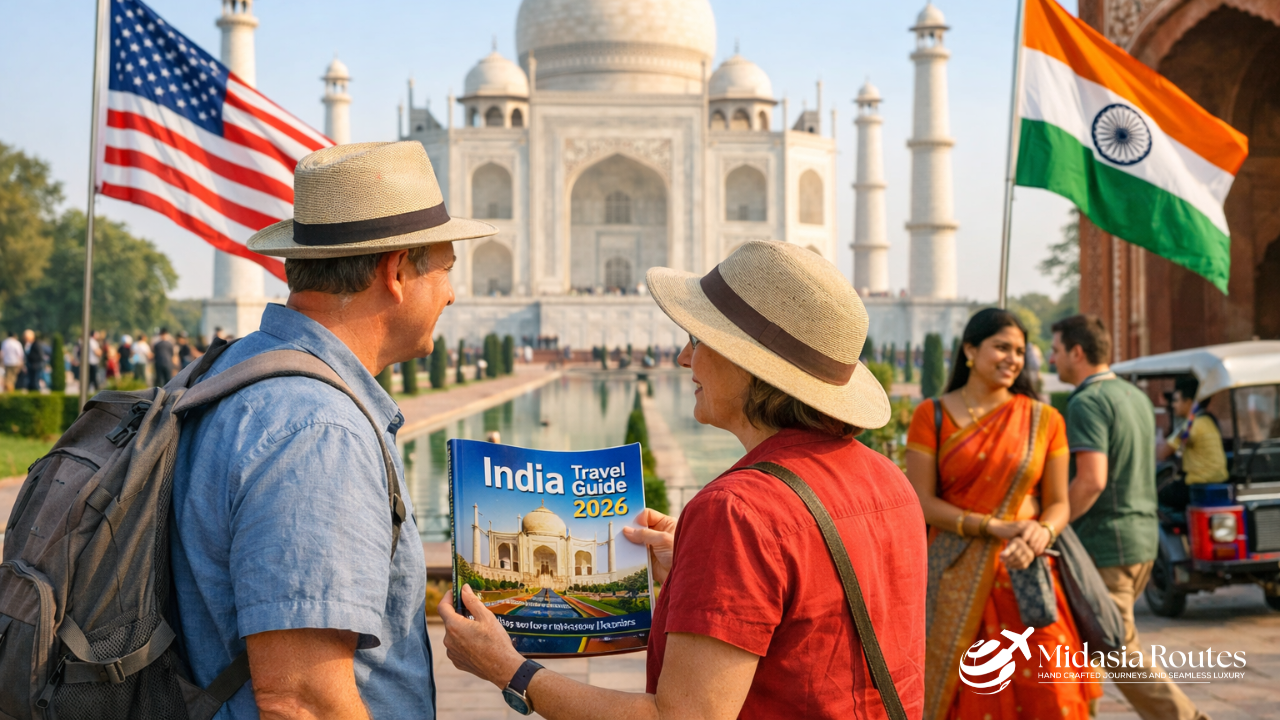
In case you have an urge to go on vacation to India being an American citizen who is going to visit the country for the first time then you are at the right website where you will get a most thorough depiction of India trip preparation as of 2026. This is the India travel guide created to assist Americans who will be traveling to India for the first time to know about the preparations they will need to make for their trip all the way from how best to obtain the visa and secure air tickets to elegantly framing an India travel itinerary and containing the chaos of the Indian culture.
Whatever your reason is – be it exploring the country’s ancicent sites, enjoying the delectable food, buying some stuff from the colorful bazaars, or simply the impossible beauty of the land draws you – from the moment you begin to prepare for the trip till the time you reach back home, this India travel guide would be the most reliable reference you would have. Visiting India is perhaps the most life-changing experience anyone can attempt or consider. India is a land that treats its visitors mainly powerfully – one cannot simply process what they see, hear, smell, and taste in India before stepping out of its borders.
For Americans used to the calming orderliness of life in the United States, India can be a refreshing and daunting experience all at the same time. A complete India travel guide would therefore not simply be convenient; it is an absolute requisite. This India travel guide will help you in every aspect of your trip to enable you to go to India in peace, security, and most courageously as a way of exploring oneself. India is more populous than any other country on earth, it ranks seventh in terms of land size, and is also among the oldest known civilizations.
There are very few countries that can boast of such a high density of history, religiosity, art and human accomplishments coexist as India does. It is because of this widespread belief that people who visit India go over millennia every step of the way. In the north, towering Himalayas lie in wait; to the south beaches there are beaches that feel almost tropical; to the west there is a desert sand of Rajasthan; to the east, there are tea plantations for which Assam is famous.
As much as a destination of India travel guide will prove that there is one India or there is another India, there are millions of Indias. Inclusions in a properly executed Indian tour will include not only just the Taj Mahal in Agra but also the ghats in Varanasi, collections of palaces in of jaipur or kobis in Kerala travelling across the entire Indian subcontinent and packing it into one unforgettable trip.
The year 2026 is one when numerous US citizens are sure to seize the opportunity to visit India if only even out of curiosity. The relevance of this India travel guide to 2026 cannot be surpassed because by then, travel has already transformed immensely – the infrastructure of the country has improved and connectivity between key areas has increased luxury and boutique hotel options making a journey in the country easier than severe dry before.
The Ministry of Tourism of India has decided to undertake initiatives to ameliorate how the country is experienced by foreign visitors. As such, the e-visas have been enhanced, the road and rail networks have improved, and new, visitor-friendly measures have been put in place at numerous important monuments throughout the different states in India.
Planning your India trip for 2026 will be much easier when armed with this India travel guide as, seasons as they are, travelling to India will require them more than any other destinations. India is a vast nation possessing every type of weather and so the period, over the course of which a trip to India is recommended, varies depending on the routes chosen. Better yet, whichever the time of the year one is thinking of visiting India, there is always a part of the country which is in the best shape in terms of tourism.
This India travel guide advises that most oriental leaning Americans coming to India for the first time should aim to come anytime between October and March as the northern plain and Rajasthan enjoy crisp cool and dry weather good for sightseeing and outdoor activities. The months of October to February are quite pleasant in north India and this is essentially the peak tourism period or the best months to visit India considering the travelers.
The months when most tourists go to India are the months when one can find Delhi, Agra, Jaipur, and the golden triangle – this season with those destinations is usually India in its finest state. The rainy period begins in June, and ends in September, unlike most other countries which have summers, and this mechanism also allows for rains to come and turn most of the areas taciturn into an irrigation paradise.
In the summer months, it is off-season in most parts of the country still many tourists prefer to enjoy the summer months as this India travel guide notices even though the country is not so accessible that is to say travel some roads, outdoors etc. when rains are heavy.
One among the priorities for the India travel guide is to describe to any prospective American tourist before they book a date to India that the recorded diversity of the people lives truly is far beyond their imagination. India is not just a country, it is neither a single entity; it is made up this way of 28 states of the Republic of India and 8 Union territories, each of which has a different language, different cuisine, different styles of dressing, different customs and festivals, and different architectural style.
Practically, travelling India in a direction from north to south or from east to west will give you the feeling of traveling about various nations out of several countries – into a single geographic chain i.e., India. This duality is the reason why the India travel guide is incredibly rich and lengthy – it is what makes the trip to India so amazingly incredible and rewarding. Our India travel guide will take you on a journey beyond the snow-capped mountains of Ladakh and Himachal Pradesh to the lovely seashores of Goa and Kerala.
Once you arrive in India, you may decide to dive into the spiritual heart of India in Varanasi and Rishikesh, but you could equally revel in the spectacular Indo-Saracenic structures in Mumbai and the colonial history of Kolkata. You can consider having an India-centered itinerary with only wildlife safari in Ranthambore, Corbett, Kaziranga or maybe you might want to subject your entire Indian trip to explore the amazing temple state of Tamil Nadu and Odisha. This India travel guide exists to ensure that you can balance all these considerations while constructing your India itinerary.
Every India travel guide that you will stumble upon recommends, among other practical steps, to take care of the little detail that is the visa to be allowed to travel to the country. This is a big relief for travelers from the United States because conveniently, India makes provision for and electronic visa or e-Visa as it is generally known to facilitate applications from US citizens for trips to India without the need to actually go to an Indian consulate or embassy physically.
According to this India travel guide , all first-time travelers from the US should apply for the Indian e-Visa early enough, ideally more than three sizes of time appropriate to the time of your departure to India. The Indian electronic Visa, e-visa, is classified into different categories depending on what kind of trip you could possibly have to this country.
Such as for leisure travelers who are Americans and are looking at this India travel guide to make plans on a tour of India, the e-Tourist Visa is the best option. Like that, you can go to India on tourism, recreation and short yoga programs and the validity goes one year from the date of issue of the eligibility and you can also do Indian immigration multiple times. You will need to have a US passport valid for, at the least, six months after the dates you plan to travel, a recent colour passport photograph and a debit or credit card to apply for the visa applicable fee.
Better yet, this India travel guide urges individuals to go straight to the official website for all e-Visa at the Indian Government to go through the website’s current application guidelines and fees. One of the core pieces of counsel this India travel guide presents is to ensure that your India e-Visa shall not have expired by the time you intend to embark on the India trip.
The e-Visa normally starts from the date of issue rather than the date of such travel to India, thus it is important that applicants know when to apply and that they would have an active visa upon arrival. A further note in this India travel guide is that a hard copy of the e-Visa should be produced and carried on the journey to India regardless of the fact that the e-Visa is connected to the passport number. Indian officials at airports, especially huge international airports, would invariably require a printed e-Visa before allowing the visitors in.
Additionally, rather than the visa, this India travel guide also contains some very crucial information that you need to know with regards to travel documents for a trip to India. Please ensure that your passport bears at least three full pages that are absolutely blank to cater for both activities upon your visit, namely in the subject of entering India and leaving India – this is because more than one page of blank space is required for one entrance into the Indian borders and – more often than not – one’s journey in India involves several countries, thus rendering a few extra blank pages prudent.
India travel guide adequately warns about the dangers of traveling without making duplicates of their travel-related paperwork, such as the passport, visas, insurance, boarding passes, etc., and they use a different bag or another piece of luggage to transport the duplicates from the bags that hold the original copies. In addition, this India travel guide considers travel insurance to be a must for a trip to India – make sure that it covers medical evacuation in an emergency, trip cancellation insurance, as well as luggage insurance.
Heading out of the United States for India, every traveler would need to fly into one of the country’s key international entry points. This India travel guide specifies the three main airports that typically serve American created travel to India: New Delhi - Indira Gandhi International Airport, Mumbai - Chhatrapati Shivaji Maharaj International Airport and Bengaluru - Kempegowda International Airport.
Most of the India travel guide implemented for American tourists, generally for the classic northern itineraries, logical option is to land in Delhi, given its proximity to the Golden Triangle – Delhi, Agra and Jaipur – which is a central feature in a number of itineraries of those who visit India for the first time. For those holidaying in India and hoping to concentrate more on southern India, western India, or certain regions within the country, this India travel guide advises that they could rather use Mumbai as their arrival city.
Flights from Mumbai conveniently connect to which means of transport or various other means of transport including Goa, Kerala, Rajasthan, and many more besides. The description of this city is interesting enough as many modern Indian cities can be to first time visitors as Indians living in America in almost every respect. It is not difficult for them to get a hold of how the city operates including its roads quite contrary to what most expect in the phase of entry into India. Confirmed tickets from various terminals in the US to the Indian mainland have virtually always included lay-overs in Europe, the Middle East or the Asia Pacific for about 16 or up to 22 hours mainly depending on the departure terminal and the flight chosen.
This section of the India travel guide strongly suggests to make your international reservations for India well in advance – ideally between six and nine months prior to the date of travel – as delays may lead to loss of good fares and seats. As you travel from the United States to India, several carriers like Air India, Emirates, Etihad, Qatar Airways, Singapore Airlines and Lufthansa, have extensive network in and out of India using modern aircraft with cheap airfares.
Also, this India travel guide recommends that if you choose to travel in economy class during such long international flights, be particular about the availability of the seat pitch and the comfort level of the seat as flying to India from the east or western coast of the United States is real long haul that will exhaust you, unless you prepare in advance.
As soon as you get to the country and set out exploring, you will find that covering India’s wide distances and different modes of transit will be the most fun and sometimes tedious parts of the adventure. This India travel guide pays close attention to transport for just this reason as moving around in the extent of India especially with the help of an extensive multi-city multi-regional India travel guide means defining those aspects well in advance.
India is the largest country in the world with an intricate railway communication system, a dense domestic aviation sector, and a constantly developing roads capacity that makes it relatively easy to get to the most popular tourist sights in India.
For most cheap travelers and even those glamorous tourists who get into India with one simple goal of getting immersed in the culture, Indian transportation is an indispensable part of every trip. This India travel guide is happy to endorse traveling by train as an especially fascinating way to see India, because train routes all over the nation cut across breathtaking views and give an unedited access to the Indian life bordered by train corridors unlike any other commercial airline.
Traveling in India, particularly for long segments of the India itinerary such as a trip from Delhi to Agra or from Mumbai to Goa, seats should be made in advance for the AC1 or AC2 seating cars to ensure utmost satisfaction and comfort. These tickets need to be booked well in advance through the Indian Railways online booking portal, as popular routes fill up quickly, especially during peak tourist season.
Amongst the Americans who find traveling to India fast and comfortable, domestic air travel turns out to be a better alternative for travel over long distances when one is on an India itinerary. Within India, there exists a vibrant domestic aviation industry characterized by an array of airlines such as IndiGo, Air India, Vistara, and SpiceJet-Jet Mod which consists of several flights within all the major cities of India at very low cost.
This India travel guide suggests that you can book domestic flights within India through any of the airlines' websites or through Indian travel booking websites such as MakeMyTrip and Goibibo that provide the least expensive rates. For tourists traveling to India in what is a restrictive time frame but with many places to visit, trains and flights interaction maximizes functionality while integrating a rich customs offer in the tour planning – there lies your answer.
No India travel guide is likely to be comprehensive without the Golden Triangle being exhaustively covered, as it happens to be the most frequently recommended itinerary of India, to most new comers and one of the greatest traveling circuits in the world. For instance, if you are coming to India for the first time and can spare roughly a week to ten days to travel, then this India travel guide suggests that you begin by touring the Golden Triangle of India.
The Golden Triangle links three of the most important and ancient cities of India, historically and culturally, namely New Delhi, Agra, and Jaipur, forming an approximately triangular route that uses roads and/or trains. Each year, numerous travelers take the Golden Triangle route in India and rightfully so, as the three cities in particular have some of the best structures, regal residences, shades of history, and food experiences on the subcontinent.
Delhi, the Indian capital, and the city where almost all Golden Triangle India tours begin, is very imposing, my dear India travel guide. Old Delhi is a maze of narrow streets, filled with markets, beautiful minarets and buildings of Mughal era and you will go back many years in time. Don’t miss the Jama Masjid, the Red Fort, the shops in Chandni Chowk or even Khari Baoli, one of the spice market’s grounds, when visiting India’s capital. In contrast, New Delhi consists of large wide streets and avenues of a colonial period city full of government offices, embassies, posh places to eat and excellent museums.
The aforementioned India travel guide advises the explorers to spend at least forty eight or so hour’s non-stop understanding of this oblique city. As far as India travel guide is concerned, one will find that New Delhi is a concrete jungle. Most tourists head out for Agra arond 200 km southeast of Delhi to see Tahmal which quite possibly is the best known building in the whole world and the best visited monument in India.
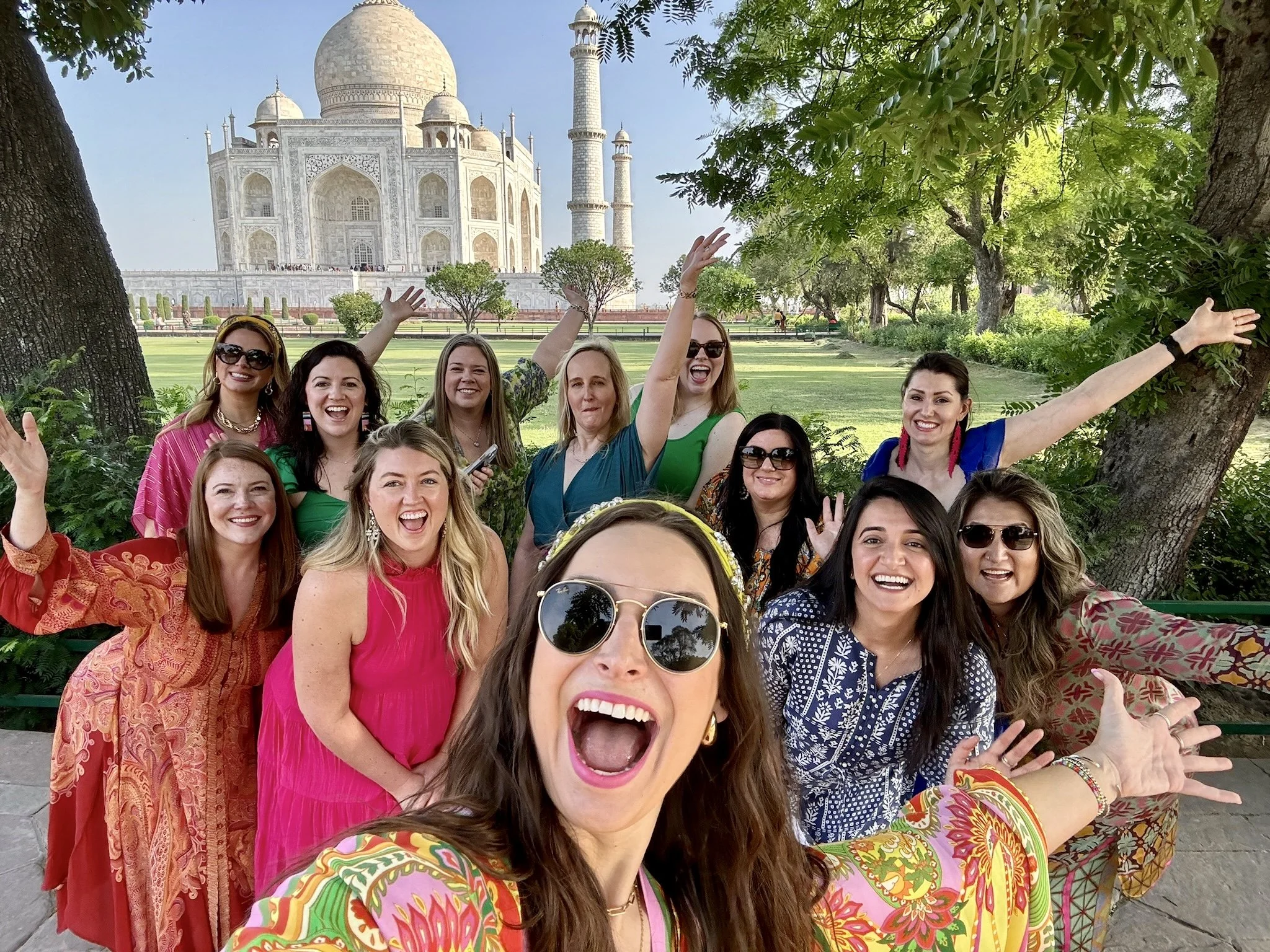
Hence, India travel guide believes that one of the wonders of the world, the Taj Mahal, far surpasses what an American has ever heard, seen or read about it. The dawn light on this mausoleum turns the massive structure silhouettes to soft orange and pink, plate of the most beautiful memories about your Naj Mahal, especially when it is your first trip to that place. In your Agra India travel plan never misses out on the spectacular Agra Fort, a UNESCO World Heritage Site, and utmost more importantly, the eerie but beautiful abandoned Mughal city, Fatehpur Sikri locating 40 km away from Agra.
When planning your India visit, the Golden Triangle is a great starting point but this India travel guide suggests that first time travelers from the United States who have ten plus days available should consider lengthening their itinerary to embrace the incredible diversity that the rest of India offers instead of getting stuck in the same old route.
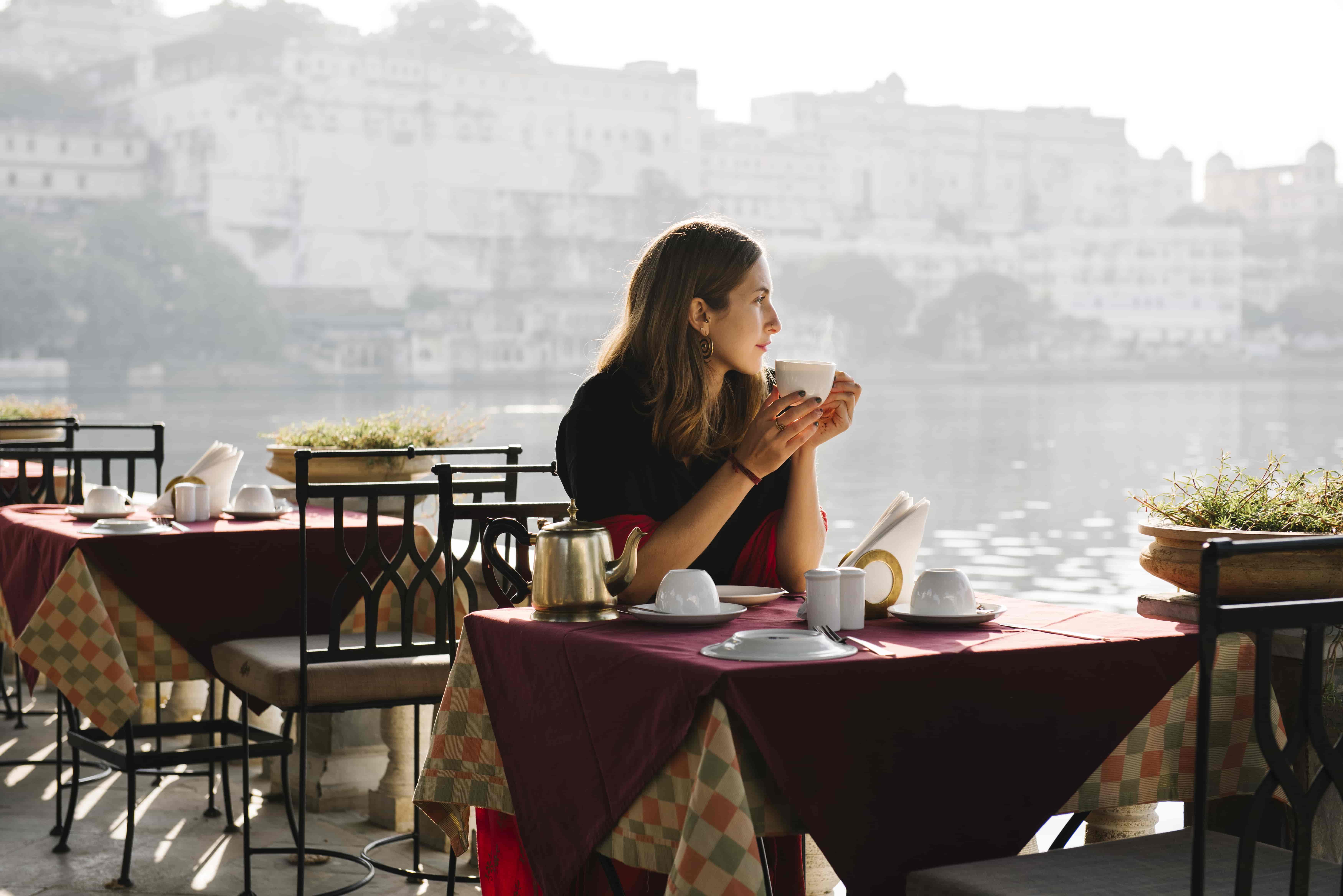
The Land of Kings aka Rajasthan also happens to be a seamless addition to the ‘Jaipur’ chapter of the Golden Triangle such that the first time tourists in India generally spend their entire holiday only in Rajasthan. There are cities like Udaipur which is often dubbed as the ‘Venice of the East’, Jodhpur referred to as the Blue City and Jaisalmer with a fort that shines golden in the midst of the Thar desert.
No India trip would be quite complete without visiting these places. Kerala, which is situated at the southernmost tip of India, contrasts greatly with Rajasthan and Delhi- it is a green area of coconut trees, perfect backwaters and resorts that promote health with Ayurugic treatment, and fish from the sea in soft waves unlike the harsh experiences offered in the north of India. treasuring a lifetime of experiences within a unique diamond houseboats for a short holiday.
Every America in this India travel guide is definitely given directions to extend their holidays beyond the seemingly usual tourism by visiting the above mentioned place highlighting one of the most definitive arguments one would make towards this nation. One of the places the reader of this India travel guide is expected to visit is Goa, which is on the west coast of India – Known for its flares Indian and Portuguese, magnificent beaches truly offer an exciting and relaxing stretch in every India trip – clear foreign man sits.
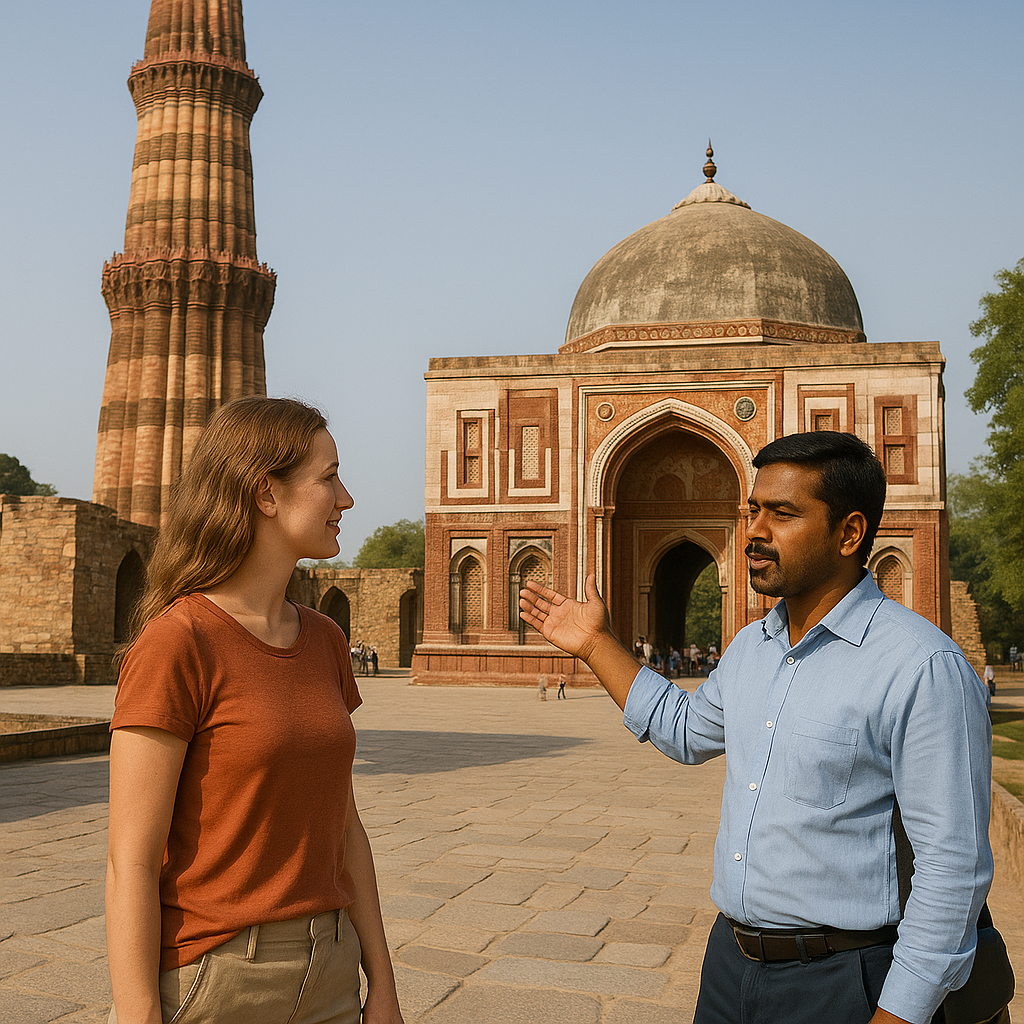
This is an India travel guide that advises foreigners from the United States for the first time on a practical India itinerary for two weeks that they can copy and adjust to suit their hobbies and even costs. The first three days should be reserved for sightseeing in New Delhi, the Old Delhi Monuments, and Bazaars, the National Museum, the Qutub Minar, and Humayun’s Tomb, and getting over the jet lag that comes with flying from the United States to India for a long trip.
Fourth and fifth days fit Agra, with a dawn tour of Taj mahal, afternoon touring Agra Fort; and the sixth day can be dedicated to an excursion to Fatehpur Sikri. Sixth to eighth day is in Jaipur, where the tourist visits the Amber Palace, the City Palace, and the infamous pink markets of the old Town. If you want to travel further, ninth and tenth days can be spent in Udaipur, known by many as the city of lovers and romance, to get aboard a boat on the sparkling waters of Lake Pichola, and pay a visit to the stunning City Palace.
This India travel guide proposes a ten-day itinerary to visit various closes – i.e., days eleven and twelve should be spent in a flight to Kerala and a cruising on the backwaters in a houseboat, also doing a short tour of Kochi’s spice markets and colonial buildings. Goa takes center stage with days thirteen and fourteen that you can really sweat it out on the beach two weeks into the India travel guide – the perfect time out to consider how compounding everything that has already been observed and experienced can be, actually is extraordinary how much.
Any India travel guide will have to admit, however, that in order to travel around India in a meaningful manner, a two-week schedule, this India travel guide has to talk about fifteen days no matter how optimistically thinking – two weeks is the bare minimum and advises Americans to extend their stay in India to at least three weeks, preferably four weeks if possible, to see more of this wonderfully fascinating country.
Welcome fellow patrons! Did you know that India is home to perhaps the world’s most mind boggling hotels? This India travel guide takes the pleasure of enlightening the discerning American travelers of the marvelous accommodation opportunities that they can avail whilst in India. On the more classy state of affairs, many of the heritage hotels found in India particularly palaces, forts as well as havelis that have been transformed, extend class, age, and sustenance that can hardly be found in any other country.
As you set out on your mala in India, the beauty of booking an expensive vacation careen within an edifice located in the city of Jaipur or Udaipur, staying in a haveli in Jodhpur or Jaisalmer, taking refuge in a posh English or British colonial style hotel in Delhi or Mumbai ceases to be merely an accommodation but forms a vital part of your travels to India as well.
The most well-known luxury hotels in India are the Oberoi and Taj hotel chains, and the present India travel guide views their hotels as some of the best hotels in the Asian continent. All the rooms at the Oberoi Amarvilas in Agra have spectacular views of the Taj Mahal, one of the most beautiful buildings in the world, and it has a reputation as a very romantic hotel.
Another property that is featured in this India travel guide as an experience of a lifetime accommodation is the breathtaking Taj Lake Palace in Udaipur, a white marble palace that seems to be afloat in the water of Lake Pichola. The majority of first-time American visitors to India find the concept of splashing out on at least one unforgettable night in a heritage property as completely logical and right.
If you are a US national with a limited amount of money to spend on a holiday in India; this India travel guide has good news, basically in India at each and every price level people get a good deal. However, few years back middle range accommodation possibilities were very limited in India, but as of now, this industry has expanded with beautifully managed boutique guest houses, business hotels and heritage homestays that provide basic yet essential facilities such as AC, Wi-Fi with English-speaking staffs for affordable prices which is rather an enhancement compared to what one can see from the prices of the same category in the states.
This travel guide to India suggests using such websites like Booking.com, Airbnb, and Indian travel website – MakeMyTrip for making all the reservations for midrange hotels, guesthouses and accommodation as per your India travel guide . On the other hand, most if not all hostels presented in big cities are modernized and welcome backpackers who may want to spend less but travel around India, without much focus on staying in hotels.
Among various things, India is known as a land where people are in love with food. It is an unending subject and the writers of this India travel guide can swamp such a material on nothing but the Indian culinary only.
One of the major misconceptions Americans must overcome before setting foot on the Indian subcontinent is that there is such a thing as Indian food – the Indian cuisine is as variegated as the Indian geography, climate, religion, and culture, and every area on a traveler’s India itinerary will have a completely distinct set of tastes, fusions of ingredients, ways of cooking, and customs of dining.
This India travel guide urges every American visitor not to be anxious in harnessing Indian food, its noisiness, or fried and moving to the bizarre and exotic, because the cuisine is quite adventurous. Most Americans are familiar with Indian food by way of the Northern and their leavened pieces of bread composed of naan or roti, rich curries using cream and legumes cooked over a long period and the tandoor oven’s flavours. With northern India’s golden triangle travel package, which includes Delhi-Agra-Jaipur outside of India, expect to eat delicious basmati rice and Naan along with butter chicken, dal makhani, biryani and skewered meats cooked in an authentic Indian manner.
The southern food of India on the other hand consists of mostly rice-based foods which are much lighter and a tad tangy, in that southern Indian foods are so familiar with rice, dhal, coconut, or even fish preparations which are all amazing that one visits south India that his attitude towards eating changes completely.
Street food is indubitably an important aspect of India travel guide archetype that cannot be ignored when preparing an India tour plan or itinerary. India tour is not complete if you have traveled to India and walked onto the streets of Delhi, Mumbai, Boston or Jaipur or anywhere in the country and did not see an avalanche of fresh cooked street food that is way much more appetizing than in any eating house.
It has been recommended by this India travel guide that the ‘chaats’ or the delectable snacks they are referred to across the length and breadth of the country due to their tamarind flavoured, saccharine, hot and crunchy bits can be best enjoyed while in Delhi where they are considered as an art. For example, vada pav in Mumbai which for this India travel guide is a must for any American on their visit to India along with much essential food experience on any exhaustive India tour would be the filter coffee of Chennai and the fish gravies of Kerala.
There is no way India travel guide would neglect this issue in the food security section for all American travelers visiting India for the first time. Food safety is a key factor of this India travel guide: if you travel India - drink only bottled or filtered water, most of the time tap water is unsafe for visitors eating in India, and it often applies to ice in drinks as well.
Therefore, on arrival in India, this India travel guide advises against eating raw salads prepared by street vendors, as an individual’s digestive system would have to adapt to the hosting environment. This India travel guide has made it mandatory for all Americans who want to visit India to include a measure of oral dehydration salts, anti-diarrheal drugs, and probiotics in an India travel pack.
Health preparedness is one of the most crucially most important components of every India travel guide and this India travel guide recommends that all Americans seek the advice of a certified travel medicine physician or their family physician no less than six to eight weeks prior to travelling to India.
For everyone travelling to India, this India travel guide strongly advises that basic immunizations against hepatitis A, hepatitis B, typhoid fever, tetanus, as well as measles-mumps-rubella, even before the departure to India, should be current. You may also wish to talk to your healthcare provider about the options for malaria prophylaxis particularly if you will be travelling outside the cities or going to wildlife preservation areas or any parts of central and eastern India where the malaria risk is very high.
Dengue fever is another illness transmitted by mosquitoes that this India travel guide appeals to American tourists in India to watch out for, making interventions such as repellent use and wearing long shirts in the evening extremely crucial.
India is broadly considered as a safe country and many international tourists visit the country every year without any problems. Nevertheless, such a vast and different country from the West as India needs some precautions which this India travel guide wants all American tourists to be conscious of.
Most of India’s tourists are getting pick pocketed as petty crime is very high in such places, and therefore, it is the best practice to travel with the use of a hidden money belt and a passport attached around the waist or the ‘universe panic pocket’ for loading cash and cards while visiting the public markets and also train stations and tourist sites in India so suggested by one India travel guide.
There are also a lot of tourist traps which this India travel guide deals with very openly – the best thing is to book everything including tours and guides transport services through your hotel or a recommended agency, and any help as offered by strangers in the vicinity of tourist sites should be taken with a grain of salt.
India travel guide makes financial preparation a key aspect of any planning. provides a pragmatic illustration of monetary containment during a visit to India for the American visitors The currency of the country is the Rupee or INR, and since India is a developing country, the exchange rate is extremely favorable for American tourists on almost all counts – accommodation, dining, shopping and transport of the whole itinerary list.
According to this India travel guide, Rt A note: It has been suggested for Americans to get a few Rupees before the start of this India travel journey by either having to order the money through the bank before they leave the country or use the services of the airports currency exchange stores the moment they reach India.
A frequent comment and question forward to this India travel guide and as expected from many American travelers intending to travel to India is on the rates or costs of traveling in India. Those visitors who are visiting India on a shoestring budget staying in the hostels and eating in the local eateries may have a comfortable stay without spending more than $30-50 USD per day.
Tourists in the mid-segment category who prefer to reside in average hotels and have meals in good restaurants should allow around $80 to $150 USD per day for the whole India itinerary. Different from budget or mid-budget travelers, high-end travelers coming over to India and staying in heritage hotels and luxurious five-star hotels must expect $250 to $500 or more per day.
Be it that you are on a short tight period in order to explore, this India travel guide gives accurate predictions as the claim for explaining in which a beach holiday in India surpasses the good quality holiday spent in U. S. or Europe and especially in Manila; offshore activities make it competitive.
One of the most important strategies of planning a trip to India is to appreciate the customs of Indian culture, and this India travel guide gives this matter the greatest attention because appropriate conduct will ensure, not only a better trip in India but also deeper and better connections with the People encountered.
Religion and spirituality play an enormous role in Indian society, and for good reason: Hinduism, Islam, Sikhism, Buddhism, Jainism, and within a less extent Christianity and Zoroastrianism are practiced by sizable numbers in the community. And when your India travel plan includes these temples, mosques, gurudwaras, and religious places, this India travel guide advises you to behave very respectfully in these spaces and take up the observance of the special practices pertaining to each belief system.
Upon going to Indian temples, mosques, meditation centers or any other holy places, it is a must to take off one’s shoes, any India travel guide that’s worth the read will stress this basic point of courtesy within the Indian religious space. This India travel guide also advises US nationals visiting religious sites in India to dress more modestly – shorts and tank tops are not permitted in most holy areas – and light scarves or shawls are to be carried whenever visits to Sikh gurudwaras and some mosques are planned.
Putting your palms together and bowing slightly – Namaste – is one of the traditional expressions of respect in India and every local during one’s India tour will appreciate this posture of Namaste, so even Americans are encouraged by this India travel guide to practice Namaste everything within their visit to India.
Many people in the United States begin their tour of India in the capital of Delhi, and this India travel guide describes that particular city in all of its beauty. The state capital is rich in antiquity as well as cultural polity; a blend that is characterized in a tomb built by Mughal emperors that lie just next to a lot of retail centers, in auto rickshaws pains luxury cars, and a prayer in an ancient mosque is immediately followed by music in a tone or two louder than I would have preferred from a restaurant.
No trip to the capital of India can be imagined without planning at least three to four days in the territory, and believe me, it will be worth it. The old part of Delhi, anchored by Old Fork and Jama Masjid, is the harshest depiction of the capital - an India travel guide almost guarantees this; especially when it comes to cuisine.
People who often use IC as well as those who have visited the country and can appreciate it as their own culture without issues, come back claiming that such a restaurant is a must because otherwise how to talk about Indian food and Karim’s is well known and obvious Karim’s is near Jama Masjid.
In this India travel guide , Varanasi has been described as the spiritual and philosophical center of the country. This has something that calls for attention especially for those who have a planned trip to India. Being situated in Uttar Pradesh state on River Ganges, this city known as Varanasi is among the most ancient cities in the world that still has its inhabitants, and it has a special place among Hindus because it is the Saint City of Shiv.
From within the territory of India to the banks of the River Ganges, into the city of Varanasi, you shall, in a single expansive picture, see all the dimensions of life fully engaged: births and deaths, marriages and cremations, rituals of baths and meditations, religious and mundane affairs and there is no other place like it in the world.
This India travel guide advises that you get up early at least once before your stay in the sacred city Varanasi comes to an end and fills a wooden rowboat with water and row it to the center of the Ganges at dawn to view the rising sun at the side of the ghats – this experience is truly uplifting for the spirit and very exciting to capture on camera.
Rajasthan is undoubtedly the state that evokes the most picturesque travel images in any India travel guide , and this is the location where many Americans will declare to be the best part of their entire India tour. Rajasthan that literally translates into Land of Kings, is a massive desert in the north-western part of India that was formerly made among many princely states that were governed by a Maharaja each and each one of them constructed forts, palaces and temples that are still magnificently intact.
Indian travel to Rajasthan in the a particular time frame travel to India and you’ll believe that a fairy tale world of golden tottering sandstone castles, glistening colored turbans worn by the people, elaborately decorated havelis and camel trains in the middle of the desert at dusk actually exists. In this India travel guide, there are four cities ; Jaipur, Udaipur, Jodhpur and Jaisalmer additional information about the trip to India emphasizing on Rajasthan and all these seem to require exploration for scant less than two complete days.
For American travelers seeking a completely dissimilar experience from the northern side of India, this India travel guide especially suggests Kerala traveling. Lying in the south-most region of the Indian subcontinent, Kerala is a thin and beautiful coastal state. The state comprises rich a landscape of waving coconut palms, rolling paddy fields plantations, tea gardens in cool hill resorts or foggy tea estates and calm inland waterways.
Especially this isn’t a trip to India but an extended holiday which includes Kerala with her backwaters – its lakes, rivers and canals in a system. This India travel guide exaggerates about this activity encouraging spending a night in a kerala rice-boat houseboat and declares that anyone who has a chance to be in India should experience this. Peruse and taste all there is of India, except for the delightful backwaters houseboat trip in Kerala, and you have surely savored the Indian cuisine save for the blue prawn curry.
Buying things in India is always one of the highlights of traveling, and every India travel guide advises all American readers to both expect it and enjoy it. The country ranks among the very few skilled crafting cultures, which have tost up several activities over thousands of years in the lines of weaving, working with gold and silver, clay, wood and even metal.
Traditionally every community and region has its own specialized craftsmanship, embroidery being one such handy craft. While traveling in India and visiting the malls in Delhi, Jaipur, Varanasi, Kochi and other destinations that are on your India travel map, one is confronted with a staggering range of very tastefully made, albeit mind-numbingly cheap items compared with the western region where such desirable crafted materials can also be found.
Cloth is arguably the most famous shopping item that one can find in India – the bandhani cottons of and the banarasi silk of Varanasi or ‘Kanjivaram’ silk sarees of the Tamil Nadu as well as the shawls made of pashmina that are bought from Kashmir that are just some examples of the work that an Indian tourist may find while visiting the country as this India travel guide also graciously advises to visit the government stores first for a broad knowledge of quality and expectation of prices before going to any local bazaars.
Modern technology has significantly simplified the process of coming to India by American citizens visiting for the first time, and this India travel guide provides useful tips on how to remain online and data dependent throughout the whole trip to India.
Thanks to an extensive 4G LTE network already present in India as well as the increasing 5G availability in most of the big cities, getting an Indian sim card for your unlocked smartphone will make more sense than carrying around foreign networks, upon reaching India.
This India travel guide urges you to buy a Prepay Indian sim card at the time of entry to India at one of India’s metros, from the main local Indian Sim Card service providers which include Jio, Airtel, and BSNL since it will be very helpful, especially for…
Categories of services google maps works efficiently in almost every area of India and as such this India travel guide’s first essential navigation devices for travel to India for Americans is maps of cities of India on the net that are accessible even while not in the net.
After creating relevant goals and objectives, this India travel guide considers how to go on vacation to India and how travelers can act when there. This ensures that the need to visit India does not change to becoming an overly demanding and stressful venture in the long run.
Above everything else, this India travel guide warns that if someone wishes to go to India, they must realize and embrace the fact that things are not going to be executed as finely as one may have planned to such a high degree in the India itinerary prepared and even given in this guide. India, however, marches to its own beat of time – postponements, departures and interesting people’s interference – these should not be grumbled over, but well acclaimed for these are things that make the ‘utterly unknown possible’.
Always have patience to spare, alongside the sunscreen and the bug spray. Indeed, come all the way with questions, but as for oneself’s answers, do that at home. The women and men of India will amaze you whenever or wherever you come across them, by being the warmest, the kindest and the most hospitable people that you will ever meet anywhere. The article ends on a simple note: an India travel guide will change one's life.
Once you visit India for the first time, you will stand at a different ground in the States: more about the history, about spirituality, about beauty, about perseverance, about society, about food, about colour, about being a human being in its full meaning. All the plannings were accompanied with this India travel guide and India will be their teacher as soon as they reach.
Travel India with an open heart; practices the India travel guide’s practical insights; design the India itinerary according to one's time and resources; brace for a surprise. The India travel guide here begins the journey - welcome to India and one may hope that their trip to India is the most transformational one where they see and experience things never imagined about the country.
Your email address will not be published. Required fields are marked *