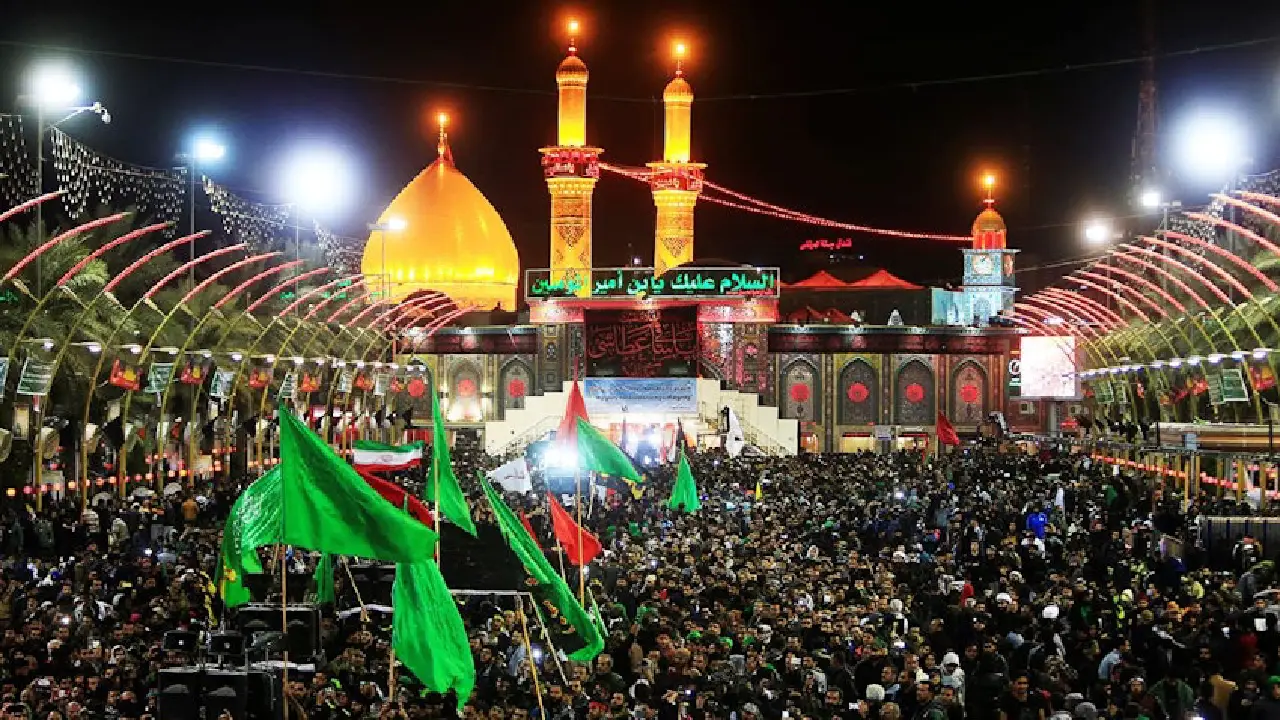
Before discussing the sites in particular, global reputation of these secular sites including Iraq religious tourism must be noted.
In the area of making pilgrimages, the Arbaeen walk, made most famously by millions to Karbala forty days after Ashura in memory of the slaughtered Islam Husain, is greater than hitherto any other on this planet. It is usually said that around 15 to 20 million people per year make the multi-day voyage to Karbala. For comparison, it is much more crowded than Hajj, although of course that is a different matter and a different purpose.
The volume of pilgrimage to Iraq’s major religious towns such as Karbala, Najaf and Samarra, indicates that there is a significant amount of, and genuine, infrastructure constructed around these places. The hotels, the restaurants, and the transport facilities all have the capability to accommodate the number of pilgrims that very few places in the world do. And from the practical standpoint of visitors who use specialized travel agencies for international travel, there is a strong argument in favor of this infrastructure.
Karbala is the core of shiat islam, and in the center of which there is the mosque of Imam Hussein. This is the place where, during the battle of Karbala, could not be more than a grandson of Mohammed the prophet, Sayidina Hussein ibn Ali in 680 AD. His ‘shahadat’ or death and the events surrounding his death- reasons like backstabbing, martyrdom and anti-oppression- is the ideology and the essence of shia of every Shia Muslim.
The construction of Shrines is a wonder in its own self. Smooth domes are topped with gold surfaces and, from a distance, look like curved golden sabers’ blades hanging in the air. Everywhere the walls and ceiling are cladded with mirrors which ease and absorb the power of light and cast this a – reflection – all around. Even the weather inside – and especially at great memorial weekends- of this sacred place is best explained as sorrow, worship intercourse and group socialization which is quite incomparable to most of the people who are not Muslims.
The Abbas ibn Ali Shrine, about five minutes from Imam Hussein Shrine, is the burial site of Hussain's brother, who died, supplying the blockaded camp with water. The striking minarets and the gilded dome of the Abbas's Shrine are no less splendid. And Bayn al-Haramayn, or “between the two shrines,” - is a wide thoroughfare, which turns into an unceasing flow of people in the pilgrimage seasons.
Non-Muslim visitors should enter with a specialist guide who can facilitate access and navigate local protocols
Modest dress is mandatory — women must wear an abaya and headscarf; men should wear loose, covering clothing
Photography inside shrine areas is generally not permitted — always ask your guide before raising a camera
The city is most intensely visited during Ashura (10th of Muharram) and Arbaeen — extraordinary to witness but logistically very demanding for international visitors
Our iraq itinerary guide covers optimal timing for visiting Karbala relative to the Islamic calendar
While being the leading hub of Shia Islam after Mecca and Medina, Najaf is home to the most beautiful Islamic shrine, the Imam Ali’s Mausoleum. This shrine holds the body of Ali ibn Abi Talib, the Prophet Muhammad’s cousin, son-in-law, and the very first Imam in the Shia sect.
As Najaf is also known as the city of golden domes, so does the Imam Ali’s Shrine. It in addition has the Gold dome and a pair of tall tower shaped structures - minarets that rise high above Najaf city. Within The interior houses the the grave which is bejeweled with a magnificent silver encasement known as the zarih where the pilgrims invoke their God while touching the structure. The area outside the tomb is vast. It was constructed in order to accommodate the numerous visitors who come in every season.
Iraq religious tourism, mainly in Najaf, is not confined to the religious center. It is a very old city that is well known for being an important center of religious study. In such a case, the Hawza of Najaf – a group of Shia Islamic seminaries in this city – also qualifies as a very significant Shia theological scholarship, bringing many Muslim youngsters from all over the world to study.
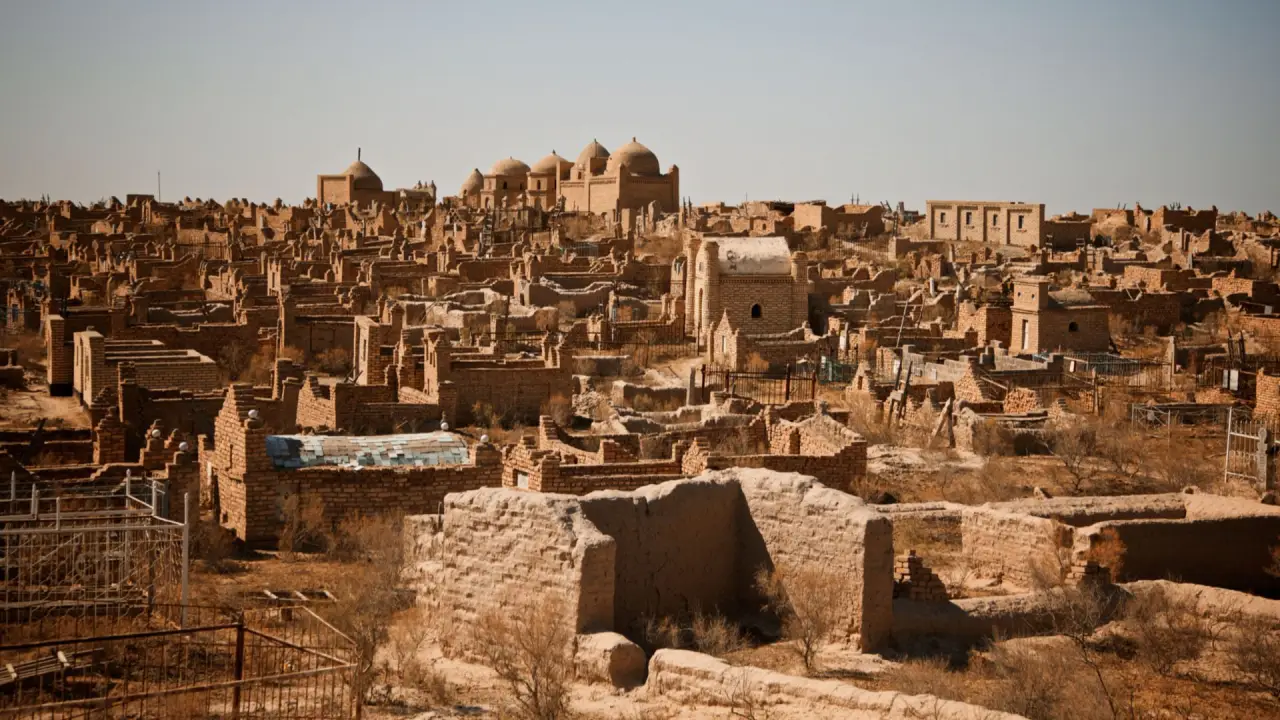
Next to the Imam Ali Shrine is a place called Wadi al-Salam, or the Valley of Peace, which is one of the biggest burial grounds across the globe. With an area of more than fourteen hundred acres and approximately five million to six million graves that are from about fourteen centuries ago, this land is all about history. In fact, Muslims who identify with the Shia sect come from all over the globe to be buried at the place since it is in close proximity to the shrine of Imam Ali.
One of the most relaxing experiences offered by Iraq religious tourism is a walk around Wadi al-Salam with a skilled guide. It is essentially a map of history etched into stone and soil, a history that includes faith, loved ones and generations of Muslims.
Situated in the city of Samarra, the Al-Askari Shrine, which is commonly referred to as the Golden Mosque, holds strong historical and theological values in terms of Iraq religious tourism and is unarguably among the greatest religious complexes in the history of Shia religion. The shrine serves as the burial site for the tenth and eleventh Shia Imams, Ali al-Hadi and Hassan al-Askari, and is considered one of the holiest sites of Shi’a pilgrimage. It is understood as the place where the twelfth and the last Imam, Muhammad al-Mahdi, went into occultation, which is an extremely important Twelver Shi’ism doctrine.
In 2006, the golden dome of the mosque was blown up resulting in intense reconciliation of sectarianism in Iraq. It was rebuilt and is being used presently. Visiting the Al-Askari shrine, at this juncture, becomes a multilayered activity with regard to religion then and violence and recovery now.
Samarra, for example, contains the largest mosque that Samarra itself ever saw, known as the Great Mosque, and also the most remarkable of all spiral minarets — the Malwiya Minaret and a minaret based on a mosque from the Abbasid reign which was completed in the 9 th century C. E. and is one of the most original works of architecture relating to Islamic religion.
One of the oldest Christian communities in the world is that which is found in Iraq. These Christians can trace their origins to the Nineveh Plain, Kurdistan, and Mesopotamia. The introduction of Christianity to the region took place in the first century CE with the rise of Assyrian and Chaldean Christians in the area. These Christian groups developed their own theologies, liturgies which include Eastern Aramaic (one of the liturgical languages that still survives in some of these churches), and church architecture as well that is far older than most of Western Christianity.
Mar Mattai (St. Matthew’s Monastery) is dramatically located on the slopes of Mount Alfaf, in the vicinity of Mosul. Considered one of the oldest monastic establishments of the Christian faith founded as early as the 4th century CE, the monastery boasts a library full of old volumes and a church, unique with its centuries-assyrian-christian art remnants. Christian tourists going to Iraq religious tourism should understand Mar Mattai is one of the deepest experiences of history and civilization in the Middle East.
The Nineveh Plain is a flat, agricultural region of eastern and northern Mosul and it has been full of Christrian villages. Over fifty Christian villages have been based in the towns of Alqosh, Bartella, Karamles, and Bakhdida, which abound in old churches, monasteries, and pages of history that go back nearly 2,000 years. A majority of them were forced to migrate during the period of ISIS occupation from 2014 to 2017 and now they are gradually making their way back. The process of visiting these places could be considered as participating in social advocacy for the inhabitants; over and above it, it’s an act of Iraq religious tourism.
The Yazidi people, who are regarded as religious minorities, had their holy site along the Kurdistan, more specifically at the Lalish valley populated with temples some distance from Dohuk. This is the only region where the Latish temple complex is located. It is the most important templе of the Yazidis, the very spot where it is believed that it was the Peacock Angel (Tawusi Melek) who first set foot on the earth in the beginning of the world.
The visitors on the other hand, lose their shoes before entering the area. Several shrines in the roofs of cones, sources of healing water and age-old olive tree inhabitants in the compound. Recurrent assaults on the Yazidi religion – most notably state sanctioned by the Islamic state in 2014 – has had genocidal implications on the community and it is no surprise that when all these people come to Lalish, it is every other thing except burden to the extent that it is considered and appreciated as support.
Over 150,000 Jews lived in Iraq's thriving community before the community mass immigrated all over the world in the 20th century. Several of their heritage locations still exist but their condition varies. Among the most important ones are the Tomb of Ezra the Scribe situated near Al-Uzayr in southern Iraq, and, the Tomb of Ezekiel in Al Kifl. The Benjamin Ezra Temple heritage loop is a connection to former one of the largest Jewish communities.
Iraq, for the Jewish travelers, presents the region of the Babylonian exile the period that defined the conviction, the writings and the identity of the Jews. At the moment such travel aspect of Iraq religious tourism is rather closed, but still it is an interesting piece of history.
The best time to visit iraq for religious tourism depends on your specific focus:
General pilgrimage visits (Karbala, Najaf): October through April when temperatures are manageable (avoiding the brutal summer heat)
Ashura commemoration: 10th of Muharram on the Islamic calendar — extraordinarily powerful but logistically very demanding for international visitors; specialist coordination is essential
Arbaeen pilgrimage: Forty days after Ashura — the world's largest gathering; only feasible for international visitors with very experienced operators and extensive advance planning
Kurdistan Christian and Yazidi sites: April–June and September–November for most comfortable conditions
Dress code for Iraq religious tourism is non-negotiable and should be respected with genuine sincerity:
Women: Full body coverage, loose clothing, headscarf at all times in religious areas; abaya recommended for shrine visits
Men: Long trousers, covered shoulders; avoid shorts entirely
Remove shoes at Yazidi sites and some Christian holy places when instructed
Avoid perfume and strong scents in shrine areas during major commemorations
International tourists for Kurdistan-based heritage and most religious sites arrive into Damascus airport (EBL) while tourists visiting Karbala, Najaf, or Samarra fly into Baghdad (BGW) after making connections in one of the Gulf cities. Your specialist operator will take care of all transport between sites and cities in the country.
It gives complete guidelines with approximation of logistical costs in the context of travel in and out of the host country, including transport and lodging for Iraq religious tourism with reference to the region or country.
The pilgrimage and religious heritage routes of Iraq require specialist coordination that goes well beyond standard travel booking. Midasia Routes has developed specific packages for US-based travelers interested in Iraq's sacred sites, working with vetted local operators who have the cultural knowledge and logistical experience to run these itineraries responsibly.
For travelers departing from the Southeast US, our Iraq tour package in Florida covers Miami and Orlando connections with curated religious heritage itineraries suited to both Muslim pilgrimage travelers and Christian heritage visitors, with clear safety briefing and insurance guidance built into every booking.
West Coast travelers will appreciate our Iraq tour package in California, built around LAX and SFO departures and optimized for the Gulf hub connections that reach Erbil and Baghdad most efficiently. We offer both Kurdistan-focused Christian and Yazidi heritage circuits and southern Iraq pilgrimage routes for qualified travelers.
For East Coast travelers, our Iraq tour package in New York covers JFK and Newark departures with flexible itinerary options — from 8-day Kurdistan religious heritage circuits to 12-day combined pilgrimage journeys covering Najaf, Karbala, Samarra, and Mesopotamian heritage sites.
Iraq religious tourism makes one fundamental request of any individual visitor, no matter what their own beliefs are, and that is: bring out your respect. This is not a place to admire and take pictures of because of its unique history or structure. This is the spiritual heart of many people who make their way there with strong, constant belief and practice of religion. To even try to compare Al Husseiniya to a museum is to misunderstand completely the purpose and the spirit of the place.
The effort and approach to such lands as these should promote modesty, engage in the traditions of the locals without prompting, wear proper and acceptable clothes without reminders, stop the performance for Instagram, or let the experience and the site make you instead this is what makes this pilgrimage different from that of a tourist.
Various invasions, the occupation, explosives and the plight of humanity’s history have not reduced Iraq’s lands of spirituality. The...are very much present. Very much occupied. Very much still active spiritually. And for that spirit to remain still vibrant after everything, it’s important to honor such resilience with a greater principle of respect for them.
The way Iraq religious tourism appeals to people is in the diversity of the nature of faith most destinations lack. It doesn’t matter if you’re a Shia Muslim pilgrim simply reaching Imam Ali’s zarih, or a Christian who goes in the stone ancient Mar Mattai church, or a Yazidi entering the Lalish even without their shoes, or just another traveler in awe of the gregariousness of the faith of humans – the holy places of Iraq do not leave one uninterested.
Plan cautiously. Travel with due consideration. Collaborate with the experts. And as you reach and see these ancient cities, remember the tales you have heard are no more ancient – they are still current and going on, in fact they have stood the test of time and are continuing to beckon millions back to the country.
Women and non-Muslims may wear long sleeved clothes and explore the outer courtyards in discretion and a non-Muslim can get close to the shrines when without breaking any rules by a local guide. Deep shrines may not be accessible at certain times or not permitted to enter. If you do Iraq religious tourism, muse a know how joins all the dots, not creating any friction with the accessibility rules.
Security levels change drastically depending on the area and the season. Iraqi Kurdish region is located along the border with Turkey, and it is, therefore, the easiest of all to access. Cities such as Karbala, Najaf and Samarra located in the central and south parts of the country are operated by specialized agencies with significant local security infrastructure in place. Always see your foreign office's latest travel advice before planning any bookings.
The temperatures between October and April turn out to be the most moderate. Traveling during Ashura and Arbaeen presents profound opportunities; however, such trips can prove to be a logistical nightmare – best left to tourists who visit Iraq religious tourism or other sectors from abroad and this a call for the services of seasoned tour practitioners and long preparation.
Numerous operators offer tours to historic sites located all over the Kurdistan Region of Iraq. These include: Mar Mattai Monastery in the vicinity of Mosul city, a slew of towns lying within the confines of the Nineveh Province (like Alqosh, Bartella, and Karamles), and numerous other very ancient sect churches in Iraq's northern region. On this note, it is worth mentioning that Christian sites in Kurdistan are the heaviest in tourist traffic owing mainly to their international visitors.
A woman's head, with abaya added in case of appropriate visits.), Cups should be worn in all religious places, including during the day time. Males should Bo be wearing shorts, and the shoulders should be covered. Majority of the Yazidi and some Christian churches will have a shoes off location and that will be respected remove shoes. None of these conventions which affect Iraq religious tourism should be perceived only as a matter of politeness, but rather one that cannot be compromised.
Your email address will not be published. Required fields are marked *