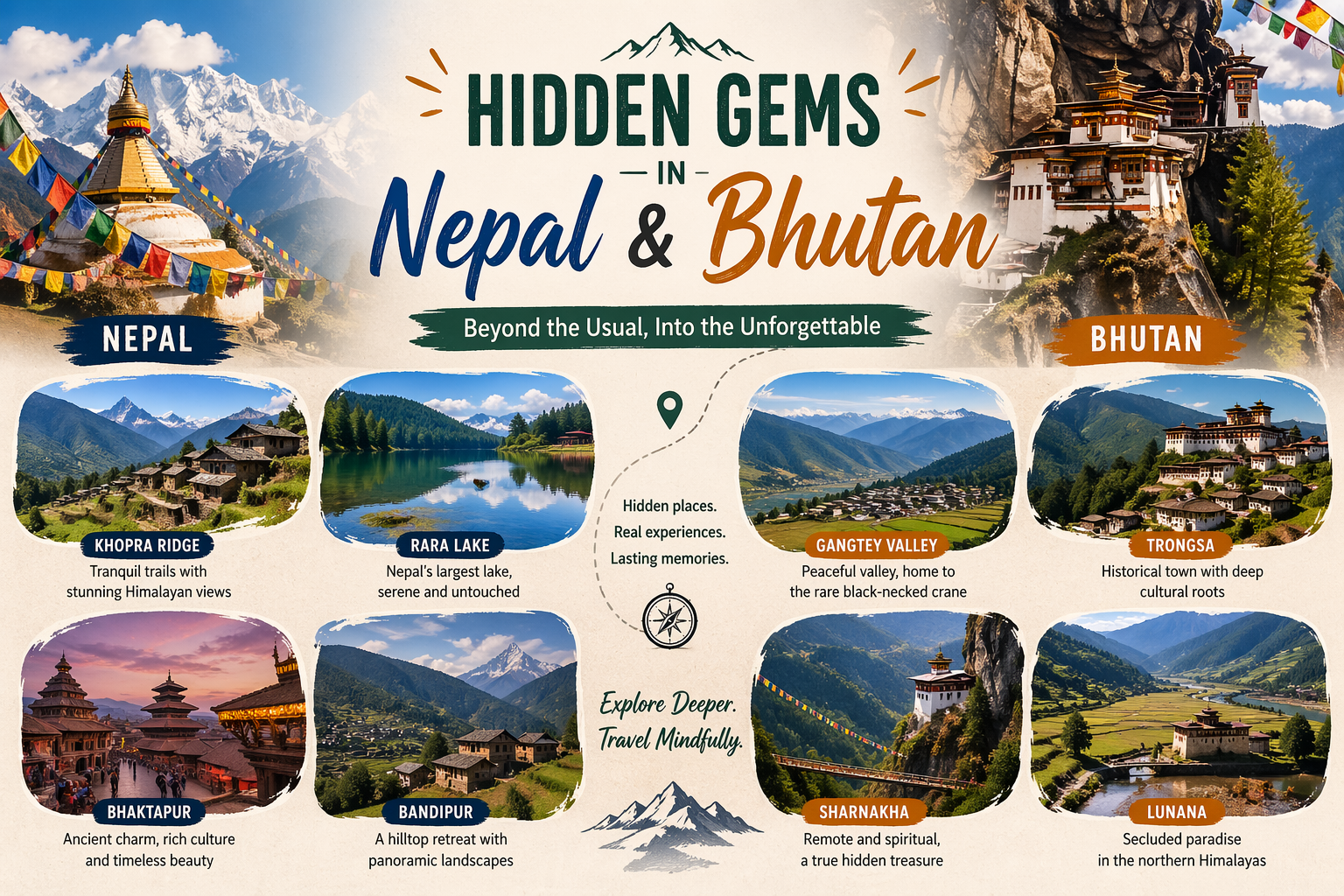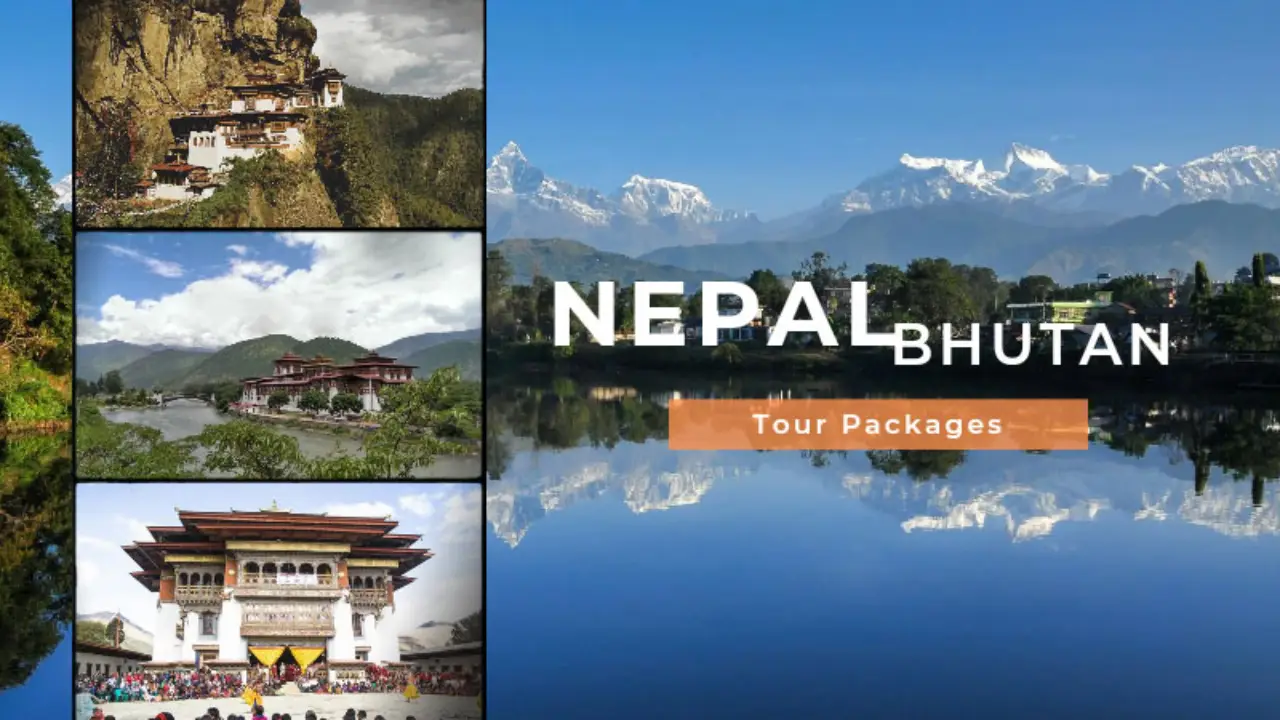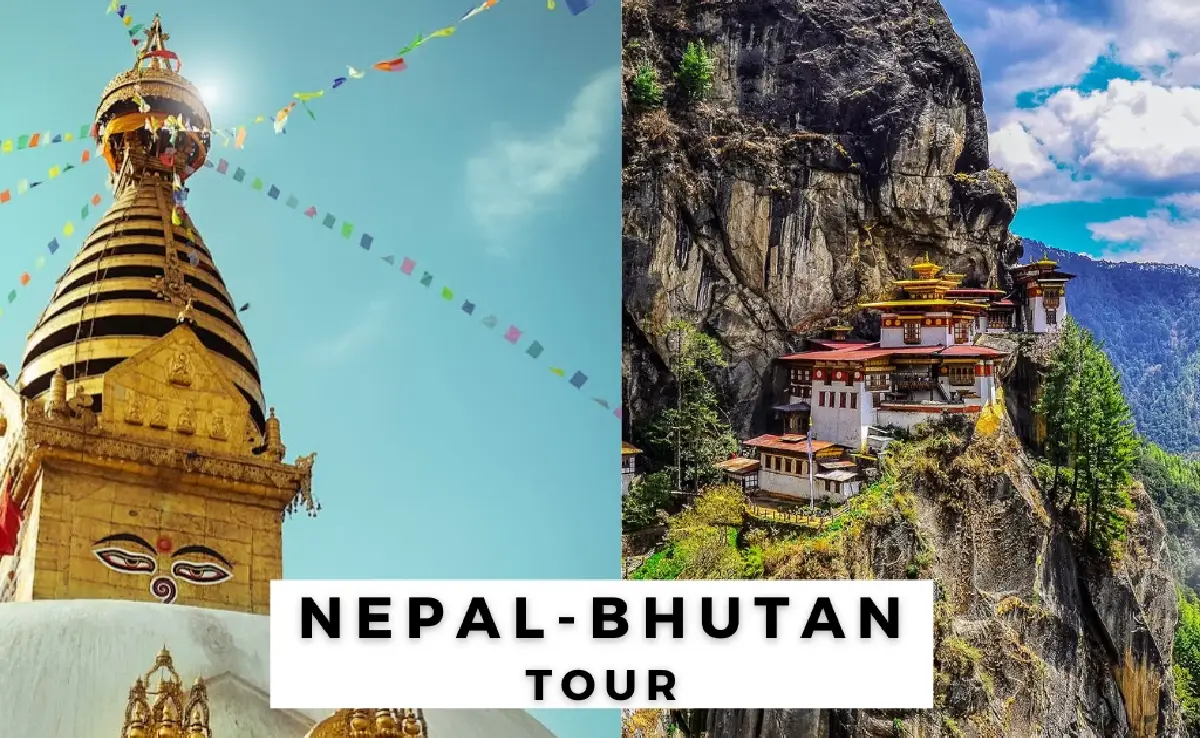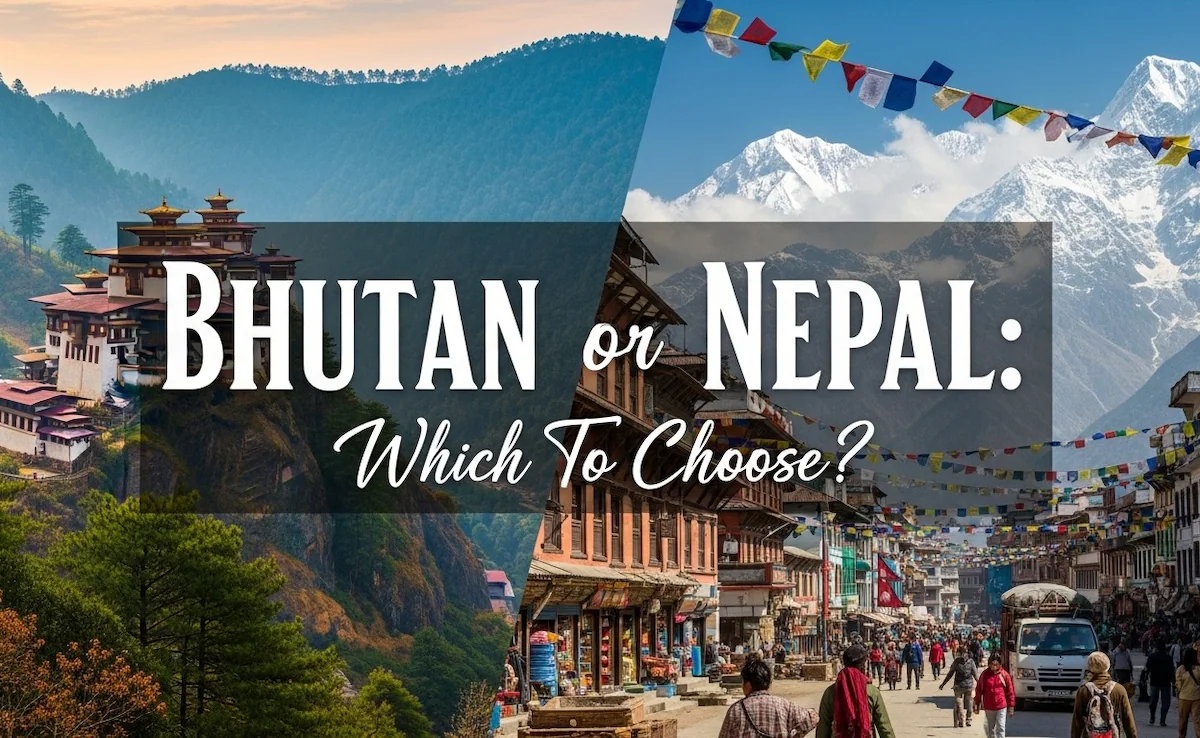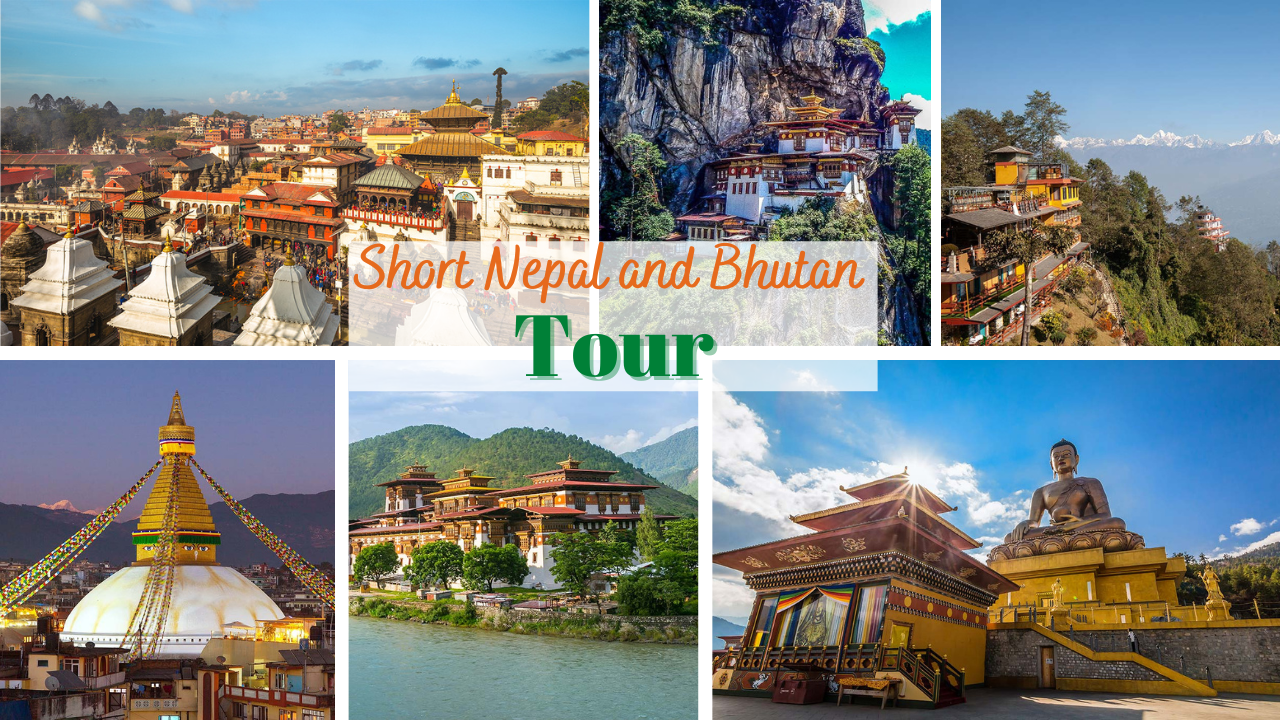
Most custom tours and journeys that somebody embarks on excludes a certain traveler. Who is looking at the center of the fields, and her gaze almost always will go around the corners of the map – areas that have to be reached with push, with an objective, and in addition, one must be ready to be modestly taken aback. If this is you, then a nepal bhutan tour will be perhaps the most beautiful experience you will invest your two weeks in.
Nepal and Bhutan Tour are two Himalayan countries situated next to each other, however, the experience couldn’t be more disparate. Times Square Nepal. Quickly, you are aware of the energy, intensity, and altitude and even the sheer impossibility of a nation, which has eight of the ten highest peaks in the world, and yet has space for ancient temples, jungles, and some of the most hospitable people under the sun. Bhutan, on the other hand, is experienced. That is soothing for lack of better words. You know how after running for hours, you take a time out and bang! It's a whole kingdom made sure to be out of touch with what it surrounds that visiting it is still considered a right as opposed to a right a sport.
Jointly these places are among the best travel destinations in the world. This particular guide serves as a detailed nepal bhutan tour trip planner for first time tourists complete with a daily schedule – no sugar-coating on arrangements, money-wise real, and revolving around worthwhile engagements.
Before I outline each day’s schedule, I will try to explain the question that some novice travelers are keen to understand: why advance on a joint trip instead of choosing one of the two countries? The simple answer lies in three things: location, time, and comparison.
When looking at the location, the two countries namely Nepal and Bhutan can be said to be geographically adjacent. The parabola trajectory from Nepal’s capital; Kathmandu, to the Paro International airport in Bhutan is less than an hour and a half. Since you are already in the same region, or rather hemisphere, you would more likely be on the same trans-Atlantic flight either from the USA or Europe. Including a side trip to Bhutan in your Nepal itinerary is cheaper than flying from one state to another in the USA.
Efficiency wise, blending the two countries in one 12–14 day mark means one international flight instead of two, and for individuals on tight vacation periods, there is a huge difference.
The decision to sign up for the trip is mostly up to the traveler; with how most people's vacations are timed, it would be more logical to opt for a nepal bhutan tour than one of the two only.
Yet, the most interesting reason is juxtaposition. The energy, the chaos of the bazaars, and the culture of trekking provide Nepal with a base level of adventure that enhances the meditation prospective tourists receive in Bhutan. The nations are not adversaries – in fact – they are like parts of a puzzle and fit together. And when you visit these two places, you will know why people who undertake a nepal bhutan tour never forget.
Nepal issues visas on arrival at Tribhuvan International Airport in Kathmandu. The process is straightforward:
15-day visa: $30 USD
30-day visa: $50 USD
Payment in cash (USD preferred); forms available at the airport
Have a passport photo ready — machines are available but can have queues
For a combined Nepal-Bhutan trip running 10–14 days, the 15-day Nepal visa is usually sufficient if you're spending 5–6 days in Nepal. Opt for the 30-day if you want flexibility.
In order to obtain a visa to Bhutan, one will need to pay around $40, which will be taken care of only with the help of a licensed tour operator in Bhutan, which means you cannot do it yourself. The travelers get this visa stamp at the immigration desk at Paro airport, after the receipt of the visa clearance letter and processing of the visa application by the operator.
In addition, the entry into Bhutan is subject to Sustainable Development Fee (USD 100) charged per person per night for foreigners. This is in addition to the visa fee and accommodations fee, and there is no room for negotiations on this compulsory fee. Let’s say with no additional charges a 7- day tour to Bhutan will cost a person an additional $700 of SDF – bear this well in mind while calculating the total cost of the nepal bhutan tour.
An air journey from Kathmandu to Paro is regarded as one of the most breathtaking short flights on the planet. The price, which generally falls in the range of between $250 and $350 USD one-way, is offered by Druk Air and Bhutan Airlines which are the airlines on the route. It is highly advisable to book this flight simultaneously while planning your Bhutan tour, as the seats are not only limited but also easily booked out during prime months namely October to November and from March to April.
The schedule for this trip is planned for 12 days, which is ideal for visitors exploring both nations for the first time with a desire for an authentic experience without the anxiety of hurrying. There is the flexibility to extend or restrict the number of days depending on one’s availability, as well as preferences.
Touch down at Tribhuvan International Airport, obtain a visa upon arrival, then make your way to the hotel in Thamel, the tourist center of Kathmandu— a busy sorcery including guesthouses, rooftop restaurants, gear shops, and street food stalls and yet so appealing and satisfying at the same time.
Take it easy and relaxed on your very first day. Stroll around Thamel, have a dal bhat in one of the chillout restaurants, and turn in early. Several time zones have been traveled over and that enforced some serious energy savings now that the task is ahead.
Kathmandu holds a remarkable concentration of UNESCO World Heritage Sites within a relatively compact area. Today covers the four essential ones:
Pashupatinath Temple — the holiest Hindu shrine in Nepal, built along the sacred Bagmati River. The cremation ghats here are confronting and deeply moving in equal measure. Non-Hindus cannot enter the main temple but can observe from the eastern bank.
Boudhanath Stupa — one of the largest Buddhist stupas in the world, surrounded by monasteries, prayer wheel corridors, and rooftop cafes. The energy here at dawn, when monks circle the stupa chanting, is extraordinary.
Swayambhunath (Monkey Temple) — a 5th-century stupa on a hilltop west of the city. The climb up 365 steps rewards you with panoramic views across the Kathmandu Valley and the slightly chaotic company of hundreds of resident monkeys.
Patan Durbar Square — across the Bagmati River from Kathmandu proper, Patan is considered the finest example of Newari architecture in the valley. The Krishna Mandir and the Hiranya Varna Mahavihara (Golden Temple) are both extraordinary.
Wake up in the dark, drive 32km eastwards up to Nagarkot, a small picturesque village positioned on a hill ridge 2,175 meters high from where one can view the most famous Himalayan sunrise in Nepal. Dawn is clear and beyond the horizon one can see the views of the mountain range extending from Dhaulagiri on the right to the Everest mountain range on the right.
On the way back, go through Bhaktapur which now should be known as one of the best-preserved medieval cities in south Asia. Instead of being massive, the Durbar Square in Bhaktapur, where some multi-storied palaces and the Moofipo craftsmen still do some work, fits the 55-Window Palace, the Lion Gate, the Vatsala Temple all in the same streets. Allow at least two hours in this area.
Take a 25-minute mountain flight or make a scenic road trip for 7 hours to Pokhara, the second largest city of Nepal which serves as the starting point for Annapurna circuit Trek. Laying at an altutude of 822 meters, the city of Pokhara is at the bank of Phewa Lake, and directly behind the city is the white wall of mountains Annapurna and Machhapuchhre, also called the Fish Tail.
You can spend the whole afternoon at the lake. There are facilities to rent a rowboat. Have some freshly prepared trout from one of the restaurants near the lake. If Kathmandu is so full of activities that one is overwhelmed, then they can visit Pokhara where the pace is slower and they can re-boot.
Wake early for the drive to Sarangkot — a viewpoint above Pokhara offering what many consider the finest accessible sunrise view of the Annapurna range. Annapurna South, Hiunchuli, Machhapuchhre, and Annapurna I turn gold in the first light in a spectacle that justifies the early alarm.
Return to Pokhara for a leisurely morning. Optional afternoon activities include:
Paragliding from Sarangkot (one of the world's finest paragliding locations)
Kayaking on Phewa Lake
Visiting the International Mountain Museum
A short hike to the World Peace Pagoda above the lake's southern shore
This is your last full day in Nepal before heading to Bhutan. Pack thoughtfully — Bhutan's guesthouses and hotels have reliable laundry services, but packing light makes the internal travel easier.
To many travel aficionados, flying from Kathmandu to Paro is well and truly the most awe-inspiring commercial flight route in the world. The plane has to zigzag through the mountains standing shoulder high on both sides so that makes sense why so few aircrew are endorsed to fly at Paro. Do place your camera on your thighs and not inside the overhead compartment.
As you arrive in Paro, it already feels different. The air becomes fresher. The streets become calmer. There does not exist a single billboard. And the architecture is such that barriers crash: not even a gas station or a post office can look like an ordinary building because it will not be allowed. As a result, the country appears to be such that it sounds like an obvious statement until you get to understand how difficult this is to reproduce in real life.
Afternoon: Proceed to Rinpung Dzong – a monastery built in the 15th century positioned on a ridge over the valley in Paro. This dzong continues to be both a religious as well as administrative hub while the courtyards, white walls, and monks cause the essence of serenity within.
Evening: Ambitny Paro’s main avenue — it is one single strip of appearance shops houses a few relaxants and surprisingly lacks the debts of noise which characterize every other town n the region except nepal bhutan tour cities.
This is the moment most people come to Bhutan for, and it earns every word of its reputation.
The ascent towards the Paro Taktsang leads one to the magnificent Tiger’s nest Monastery. This 17th century temple is one of the holiest sites in bhutan perched high up in a cliff 900 meters above the Paro valley. As believed by the systematic history of bhutan, it is said he flew on a tiger’s back to this rock and stayed for 3 months meditating in the caves. The caves were built on the rocks around the sanctuary in the year 1692.
Practical Hike Details:
Distance: approximately 5km one way
Elevation gain: 900 meters from the trailhead
Duration: 4–6 hours round trip depending on pace
Difficulty: moderate — manageable for most healthy adults with reasonable fitness
Horse hire available for the lower portion (to the first viewpoint)
Bring water, sunscreen, and layers — the trail moves through forest and open ridge
Along the way, a teahouse serves as mid-point rest, and provides perhaps Asia's most breathtaking view of the Tiger's Nest teeming half-filed away from sheer rock with the accompaniment of lush funnel of nature below. This is where you have tea. You look for an empty space, until you find one eventually. Such a view controls your actions.
Within the complex, an approach to four main temples is possible. No cameras allowed inside. You will have to leave your bag and camera at the entrance and with all decency go inside – this is a functioning temple, not a history of art.
The Tiger's Nest dominates Paro's reputation, but the valley around it contains equally remarkable sites that see a fraction of the visitors.
Drukgyel Dzong — a ruined fortress at the head of the Paro Valley, built in 1647 to commemorate a victory over Tibetan invaders. The ruins are dramatic against the backdrop of Chomolhari (7,326m) on clear mornings.
Kyichu Lhakhang — one of Bhutan's oldest and most sacred temples, believed to have been built in the 7th century by the Tibetan king Songtsen Gampo. The temple is small, intimate, and completely genuine — a working religious site, not a visitor attraction.
Paro Museum (Ta Dzong) — a former watchtower converted into Bhutan's national museum, with collections covering Bhutanese art, textiles, natural history, and thangka painting.
It takes more than 60 minutes to travel from Paro to Thimphu along a river valley road. Let it be the introduction to the Bhutanese road - - - the views are amazing while the pattern of driving is another interesting chapter with its own specifics.
The only national capital in the world that does not have any traffic lights is Thimphu. In Thimphu, at the major junction there is a police man who wears white gloves and hands over traffic commands to the vehicles - - it is so Bhutan that it is almost self explanatory of where the country stands when it comes to modern day issues.
Thimphu Travel Guide Highlights:
Tashichho Dzong — the seat of Bhutan's government and the summer residence of the Je Khenpo (chief abbot). The dzong sits on the banks of the Wang Chhu River and is one of the most architecturally impressive buildings in the country.
Buddha Dordenma Statue — a 169-foot bronze Buddha sitting on a hilltop above the city, filled with 125,000 smaller Buddha statues. The views over Thimphu Valley from the base of the statue are remarkable.
National Memorial Chorten — a major religious monument in the heart of the city, built in 1974 in memory of the third king. Locals circle it in devotion throughout the day, prayer beads in hand.
Takin Preserve — home to Bhutan's extraordinary national animal, the takin — a stocky, ox-like creature that looks like the improbable result of a bison and a goat falling in love.
Craft Bazaar / Weekend Market — Thimphu's produce market by the riverside brings together farmers, weavers, and food vendors from across the valley. If you're there on a weekend, don't miss it.
Bhutan is one of the finest places to travel to by road. The road can be so scenic that one may be tempted to forgo the more often preferred air option. One of the best drives in Bhutan is slightly localized; nether the less admirable.
One drives from Thimpu Chapter and onwards, to Punakha, straight over the heart and country level Dochu La Pass which stands 3100 meters above the sea. One hundred and eight memorial stupas, also known as chortens, are placed in a circular manner in a rhododendron woodland. And if the heavens are kind and there are no clouds in the sky, one can see the entire eastern Himalayan range, which includes Gangkhar Puensum, the highest peak in Bhutan at 7570 m above sea level and the highest unclimbed one as yet, is breathtaking.
In the confluence of the rivers Pho Chhu and Mo Chhu in the valley located at an altitude of 1200m, there is the town of Punakha. This is how for instance, until 1955, the capital of the kingdom then was Thimpu, while historically Bhutan was.
Several backpackers, driven by travel agencies find it convenient to get on the nepal bhutan tour.
Punakha Dzong is the crown jewel of Bhutanese fortress architecture. Built at the confluence of two rivers in 1637, it served as the administrative and religious center of Bhutan for centuries. The dzong is still used for important royal and religious ceremonies — the Bhutanese royal family was married here in 2011. Walking its corridors, crossing its cantilever bridge, and standing in its inner courtyard beside the ancient jacaranda tree is one of the finest experiences Bhutan offers.
Punakha's surroundings reward slow exploration on foot.
Chimi Lhakhang — the Temple of the Divine Madman — sits on a small hillock in the middle of the Punakha Valley, reached by a 20-minute walk through rice paddies and traditional village lanes. The temple is dedicated to Drukpa Kunley, a 15th-century Buddhist master whose teaching style was deliberately outrageous and whose symbol is the phallus — displayed prominently on houses throughout the valley as a blessing against evil spirits. The temple is charming, the walk is beautiful, and the story of Drukpa Kunley is one of the most entertaining in Himalayan Buddhism.
Khamsum Yuley Namgyal Chorten requires a 45-minute uphill walk through pine forest above the north Punakha Valley. The reward is a recently completed four-story temple with extraordinary views over the valley and some of the most intricate interior murals in Bhutan.
Drive back to Paro for your international departure. If your flight is in the afternoon or evening, the morning can be used for:
A final walk through Paro town
Shopping for Bhutanese crafts — hand-woven textiles, thangka prints, locally produced paper products
A quiet morning at Kyichu Lhakhang, which is even more peaceful in the early hours
The flight back to Kathmandu (for a connection home) or directly to your hub city closes the loop on what most travelers describe as one of the most complete and emotionally resonant journeys they've ever made.
If you have two additional days, here's where to spend them:
In Nepal: Add Chitwan National Park for a jungle safari (rhinos, elephants, crocodiles, and potentially tigers) or opt for a short trek — the Ghorepani-Poon Hill circuit from Pokhara is a 2-day trek that delivers Annapurna sunrise views that rival anything on the standard circuit.
In Bhutan: Extend to Bumthang Valley — Bhutan's spiritual heartland and one of the hidden gems in Nepal and Bhutan that most standard packages skip entirely. The ancient Jambay Lhakhang temple, the Tang Valley, and the local apple brandy distillery collectively make Bumthang one of the most rewarding places in the entire country.
A complete Nepal Bhutan tour covering 12 days typically costs:
Budget traveler: $3,000–3,500 USD per person (including international flights)
Mid-range: $4,500–6,000 USD per person
Luxury: $12,000–20,000+ USD per person
A traveler can cover all expenses in Nepal and still stay within budget. The problem is Bhutan. No matter what budget, one has to spend $100 every night in Bhutan as part of the mandatory SDF fee while travelling in the country. For instance, if it’s a 7-Night stay in Bhutan, that’s $700 in Skip Fees, before even a single accommodation or guide costs are accounted for. So please account for this information beforehand.
For those who need a complete Nepal Bhutan tour cost guide, with a description of what contributes to cost increase and decrease, and most importantly, how to cut corners without losing out, there is a comprehensive section on this tour.
The anxiety level for many people departing New York City in meeting proper regulations of all Bhutan Expedition accredited service providers, and sorting out connection flights among various airlines, can be quite high. A nepal bhutan tour from New York through Midasia Routes brings all these issues into one platform to include the visa where applicable, tracking schedule of flights to and from Bhutan, choosing appropriate bhan waves and creating daily personal travel programs, nepal bhutan tour response envelop for applicants that does not come in any crafted form is not mandatory because of time conscious planning.
Accordingly, those breathing the air on the coasts especially for the first time looking at planning out their travels into Himalayan countries find a Nepal and Bhutan tour in California most appropriate partner in acting in collaboration with them in all of their activities. Receiving passengers flying out of Los Angeles, flights originating from San Francisco, or boarding a flight in Seattle, Midasia Routes engages with tourists, developing an itinerary that suits the index, interests and pace of individual tourists
Thus, if a person comes from the South-eastern region of the US and has been waiting for the moment where the person would become eligible for this trip, the good news is there is a mystic nepal bhutan tour in Florida as a good example on how to start. Midasia Routes coordination center organizes your travel from the initial engagement to the final goodbye - a complete procedure unlike the normal independent ones where traveling to Bhutan, for instance, would be very exhausting and plan-compounding.
Altitude awareness: Kathmandu sits at 1,400 meters; Paro at 2,200 meters; the Dochu La Pass at 3,100 meters. Ascend gradually, hydrate consistently, and don't push hard on your first day at elevation. Altitude sickness is real and its onset can be deceptively slow.
Photography etiquette: Always ask before photographing people — in both countries. Inside dzongs and temples in Bhutan, photography is often restricted or prohibited entirely. Follow your guide's lead.
Dress code: Bhutan requires covered shoulders and knees when visiting dzongs and monasteries. Pack layers for both countries — mornings and evenings are consistently cooler than midday even in peak season.
Currency: Nepal uses the Nepali Rupee (NPR); Bhutan uses the Ngultrum (BTN), pegged 1:1 to the Indian Rupee. USD cash is useful for exchanging in both countries; ATMs are available in Kathmandu, Thimphu, and Paro.
Connectivity: Nepal has solid 4G coverage in cities and most trekking areas. Bhutan's coverage is improving but remains patchy outside major towns. Many travelers describe Bhutan's limited connectivity as a feature rather than a bug — embrace the digital detox.
Understanding the best time to visit Nepal and Bhutan is one of the most important pre-trip decisions you'll make. October–November and March–April deliver the finest conditions for this specific itinerary — clear skies, festival season, and optimal trekking temperatures at every elevation.
Visiting Nepal and Bhutan cannot be marked as destination completed. It is more than that, it is about making memories- a monk who spins a prayer wheel in the early morning, seeing snow Capped Himalayas after a wait of three days, hearing the rhythmic beats of a drum against the walls of the valley-far away, is the 'something' that collectively does shift something within you.
Every first-time traveler in this part of the world seems to leave with the same report - they came with an expectation of beautiful mountains, but they left with their understanding of themselves. That’s what Nepal does. But it is Bhutan that, in a quiet manner, does more than that. It makes it impossible for one to figure it out in a matter of weeks.
Whatever the interest; adventure, culture, spirituality, or simply the desire for the genuine experience of a different place; a nepal bhutan tour arranged in a way which would have a person interested in all of these cases in two weeks would be perfect – short – but perfect.
Ten days is enough, but it is far more desirable to spare 12-14 days. The best itinerary for those who have never been there will be five to six days in Nepal and six to seven days in Bhutan. Indeed, if your nepal bhutan tour lasts less than ten days, you will have little or no time in at least one of the countries, and what is the time rush for – these two states are better enjoyed than almost all the other destinations in that continent.
The process of obtaining a visa to travel to Bhutan costs about $40 USD and needs to be done in collaboration with a tour operator licensed in Bhutan. You won’t be able to apply for a Bhutan travel permit yourself since it is not possible to apply separately. Before the travel date, the operator gets the traveler a visa clearance letter, however, the actual visa is received when the traveler enters through the Paro airport. This fee is not applicable to Bhutan’s compulsory $100 USD fee per night referred to as the Sustainable Development levy.
Yes, provided that one prepares adequately. The hike is considered to be of moderate difficulty because it is about 5km towards the end and it goes as high as 900 meters. Any healthy adult can do it, and it takes around 4 to 6 hours in total. The path is in good condition, has appropriate signs for the hikers, and has a lodging house with at least a teahouse where one can rest halfway. Other than that, horses are available for the lower segment. The key traits would be a decent level of physical activity, hiking boots, and waking up early so that there’s no strain of the scorching sun in the afternoon.
The two ideal times of year are during the months of October through November and March through April. Most people prefer coming in October and here is what makes it really inviting; clear skies as it falls immediately after the monsoon, breathtaking mountain views and the celebration of famous events such as Thimphu Tshechu in Bhutan and Dashain in Nepal which enhance the cultural vibes. On the other hand, rhododendron flowers and Paro Tshechu festival take place in both March and April during the spring trekking on terrains in both of the countries.
Nepal can be visited with any tourist conditions. Bhutan, instead, requires international travelers, except for those from India, Bangladesh and the Maldives, to book their trips via licensed Bhutanese tour operators. In other words, no travel will be allowed within Bhutanic territory. Therefore, a nepal bhutan tour is never purely independent — Rajasthan being restricted however, the majority of visitors realize that having qualified help during the Bhutan segment enhances the trip greatly.
Ready to start planning your Nepal Bhutan journey? Reach out to Midasia Routes and let our team build the itinerary that fits your timeline, travel style, and budget — first-timer friendly, genuinely expert, and built around experiences that last.
Your email address will not be published. Required fields are marked *