Visitors to India during their first trip usually stay in northern regions which include Delhi Agra Rajasthan and Varanasi. They return home after witnessing extraordinary sights because they believe they have seen all of India. The south of the Vindhya mountains holds an entirely separate civilization which developed its own cultural identity before the Mughal empire established control over northern India. South India tour packages open that door. The temple towers in this area reach 200 feet height which extends above the flat plains. The region features backwater canals that flow through coconut groves and rice paddies situated at sea level. The food undergoes total transformation every 200 kilometers which starts with Kerala's coconut seafood and ends with Tamil Nadu's temple town thalis and Karnataka's Udupi cuisine.
The south is not a single destination. The south consists of four main states which include Kerala Tamil Nadu Karnataka and Andhra Pradesh plus the territories of Puducherry and the Andaman Islands. Each territory has its own language system and architectural style and holiday traditions and food specialties. A well-designed South India tour package brings those identities together into a coherent, deeply rewarding journey.
This guide contains all essential information about best travel spots and state attractions and itinerary planning and budget estimation and South India trip designing for your specific travel needs.
The Taj Mahal and Red Fort and Humayun's Tomb represent Northern India Mughal monuments which have achieved worldwide recognition. The South Indian Dravidian temple architectural style exists as an exceptional architectural tradition which international travelers miss because they do not travel beyond the southernmost boundary of the country.
The gopurams of Tamil Nadu — soaring gateway towers covered in thousands of hand-sculpted deities, demons, celestial beings, and mythological scenes — are among the most visually overwhelming architectural achievements on Earth. The Madurai Meenakshi Amman Temple contains fourteen gopurams which include a tallest gopuram that reaches 52 meter height. The Brihadeeswarar Temple in Thanjavur, built over 1,000 years ago, has a single vimana tower rising 66 meters from a single granite base. These buildings are not ruins or museums. The active temples function as worship spaces which thousands of devotees visit every day and their internal atmosphere creates a distinct experience that differs from anything available in northern India.
The western boundary of South India leads to the Arabian Sea while its eastern boundary reaches the Bay of Bengal, and the two oceans meet at Kanyakumari which marks the southernmost point of the Indian subcontinent. The various beaches of India present diverse experiences, which include Kerala's peaceful shores with palm trees, Goa's active beach areas, the isolated beach areas of Karnataka's Karavali coast, the holy beaches of Tamil Nadu, and the distant coral-ringed beaches of the Andaman Islands, which exist in the Bay of Bengal.
The development of South India tour packages needs to start with beach tourism as the first element, which should connect beach locations with cultural attractions through a travel path that goes along the coastline instead of using the mainland road.
The state of Kerala serves as the main center for genuine Ayurveda because the ancient wellness system has been continuously practiced there for 5,000 years. The South India tour packages which feature a Kerala Ayurvedic retreat offer travelers an experience that no other Indian region can match in both depth and authentic expertise.
Kerala consistently tops lists of India's most beautiful states, and the superlatives are earned. A long, narrow state running along India's southwestern coast between the Western Ghats and the Arabian Sea, Kerala packs an extraordinary density of landscapes, cultures, and experiences into a relatively compact geographical footprint.
The Backwaters Kerala's backwater network — 900km of interconnected canals, rivers, lakes, and lagoons threading through the coastal lowlands — is the experience most travelers come for, and it delivers completely. A private houseboat cruise on Alleppey (Alappuzha) is the classic format: a converted traditional rice barge fitted with bedrooms, a sun deck, and an onboard cook who prepares fresh Kerala seafood as the boat drifts through villages, paddy fields, and coconut groves at walking pace. Time genuinely slows down on the backwater.
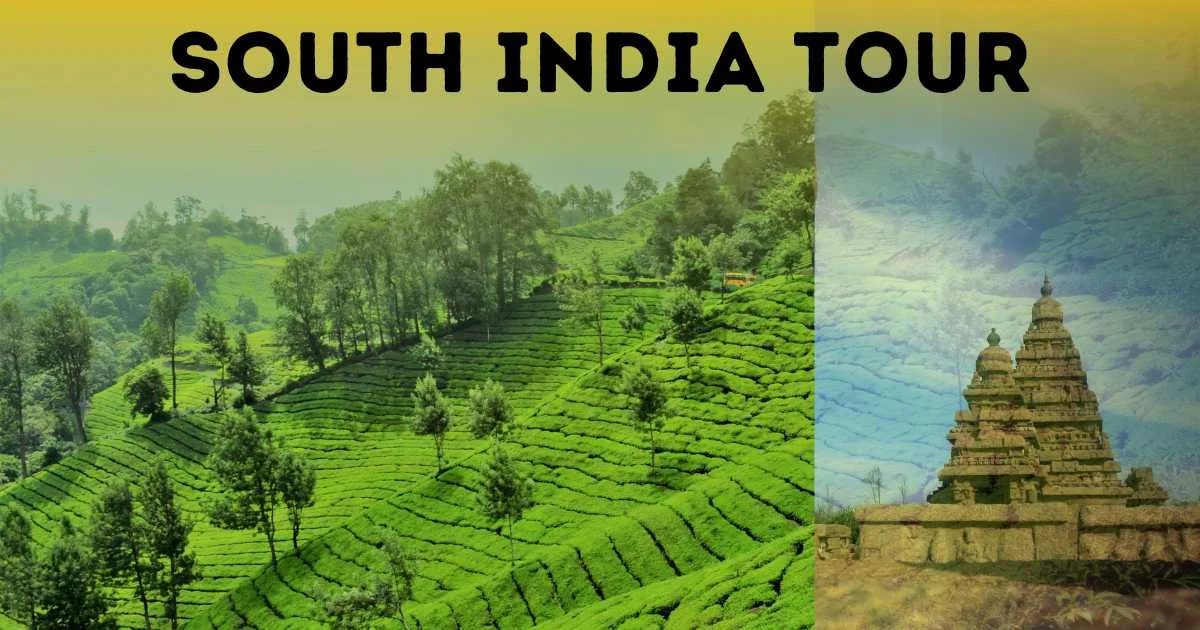
Munnar Up in the Western Ghats at around 1,600 meters, Munnar is Kerala's most beautiful hill station — a landscape of rolling tea estates, cardamom forests, cool morning mist, and occasional sightings of Nilgiri tahr on the upper slopes. Colonial-era tea bungalows converted into boutique stays give Munnar a romantic, unhurried atmosphere that contrasts beautifully with the coastal energy below.
Thekkady and Periyar The Periyar Tiger Reserve surrounds a large reservoir in the Cardamom Hills, and boat safaris on the lake — watching elephants come to drink at the shore, with the jungle rising steeply behind them — are one of Kerala's finest wildlife experiences. The surrounding spice plantations offer guided walks through vanilla, pepper, cardamom, and coffee cultivation that put a completely different lens on the ingredients in every Kerala curry.
Kovalam and Varkala Kerala's beach options divide between Kovalam — a developed crescent beach south of Thiruvananthapuram — and Varkala, a cliff-top village north of Kovalam where guesthouses and restaurants perch on a laterite promontory above a beach that stays relatively uncrowded. Varkala particularly rewards travelers looking for a genuinely relaxed coastal base.
If Kerala is about landscape and wellness, Tamil Nadu is about history, architecture, and the living traditions of Dravidian civilization. South India tour packages that skip Tamil Nadu are leaving out the cultural heart of the entire region.
Chennai Tamil Nadu's capital is the entry point for most international visitors flying into the south. The city itself has genuine character — the Marina Beach promenade (one of the longest urban beaches in the world), the Government Museum's extraordinary bronze collection, and the Kapaleeshwarar Temple in the Mylapore neighborhood give Chennai more depth than its reputation as a transit hub suggests.
Mahabalipuram (Mamallapuram) An hour south of Chennai, Mahabalipuram is a UNESCO World Heritage Site of extraordinary significance — 7th and 8th-century rock-cut temples, cave sanctuaries, and the famous Shore Temple standing at the edge of the sea. The sculptural tradition represented here is among the finest in Indian art history, and the site remains remarkably uncluttered compared to major northern monuments.
Kanchipuram The City of a Thousand Temples sits 75km southwest of Chennai and has been a major pilgrimage center for over 1,500 years. It is also the center of Tamil Nadu's silk weaving tradition — Kanchipuram silk sarees are among the most prized textiles in India, and visiting a weaving workshop here to watch the patterns emerge on handlooms is one of Tamil Nadu's most memorable cultural experiences.
Madurai The heartland of Tamil civilization, Madurai has been continuously inhabited for over 2,500 years and centers on the Meenakshi Amman Temple — a living, functioning religious complex of a scale and complexity that must be experienced to be understood. The temple's 14 gopurams, 33,000 sculptures, and the nightly ceremony in which the deity is carried to the inner sanctum create an atmosphere of genuine devotion that is overwhelming and moving in equal measure.
Thanjavur and the Chola Trail The Brihadeeswarar Temple in Thanjavur — built by the Chola emperor Rajaraja I and completed in 1010 CE — is one of the greatest architectural achievements in Indian history. The precision of its construction, the scale of its granite vimana, and the extraordinary Chola-era bronze sculptures in its museum collectively form one of the most significant cultural sites in South Asia. The surrounding Chola heartland — Gangaikonda Cholapuram, Darasuram, and Chidambaram — forms a temple circuit that serious architecture and history travelers rank among the finest in the world.
Karnataka is the state that most international South India tour packages underuse — which means it rewards those who include it with a sense of discovery that more heavily visited destinations can't match.
Mysuru (Mysore) The former royal capital of the Wadiyar dynasty is one of South India's most elegant cities — wide, tree-lined boulevards, a tradition of sandalwood and silk craftsmanship, and the magnificent Mysore Palace at its center. The palace's interior — ivory inlaid floors, stained glass ceilings, gold-leaf throne room — is one of the finest examples of Indo-Saracenic architecture in India. The Dasara festival in October, when the palace is illuminated by 97,000 light bulbs and the royal family processes on decorated elephants, is one of the most spectacular cultural events in South India.
Hampi The ruins of Vijayanagara — the capital of the last great Hindu empire, destroyed by the Deccan Sultanates in 1565 — spread across a boulder-strewn landscape on the banks of the Tungabhadra River. The UNESCO World Heritage Site covers 26 square kilometers of temples, market streets, royal pavilions, and elephant stables, all rendered in a landscape so strange and beautiful that it looks like a film set. Hampi is one of the genuine hidden gems in India — less visited than it deserves to be, more remarkable than most travelers expect.
Coorg (Kodagu) Karnataka's hill district in the Western Ghats is a landscape of coffee and spice estates, rainforest-covered hills, river valleys, and a distinctive warrior culture — the Kodava people — with its own cuisine, language, and festival traditions. Coorg is one of South India's finest weekend escapes for Indian travelers and remains relatively undiscovered by international visitors, which is precisely what makes it so appealing.
A former French colonial territory on Tamil Nadu's eastern coast, Puducherry offers a travel experience genuinely unlike anything else in South India. The French Quarter — a grid of mustard-yellow colonial buildings, bougainvillea-draped balconies, and cobblestone streets — feels like a small Provençal town that somehow ended up on the Bay of Bengal. Excellent French-influenced restaurants, boutique hotels in restored colonial villas, the Sri Aurobindo Ashram, and the nearby Auroville experimental township make Puducherry a fascinating 2-day addition to any South India itinerary.
A well-structured South India tour package for first-time visitors typically runs 12–16 days. Here's a framework that covers the essential highlights:
Days 1–2: Chennai — city orientation, Mahabalipuram day trip, Kapaleeshwarar Temple Days 3–4: Mahabalipuram and Puducherry — Shore Temple, French Quarter exploration Days 5–6: Madurai — Meenakshi Temple, Thirumalai Nayakkar Palace, local market Day 7: Thanjavur — Brihadeeswarar Temple, Chola bronze museum Days 8–9: Mysuru — Mysore Palace, Chamundi Hills, silk and sandalwood workshops Day 10: Coorg — coffee estate walk, forest walk, local Kodava cuisine Days 11–12: Kerala entry — Munnar tea estates, Periyar spice plantation Days 13–14: Kerala backwaters — private houseboat cruise, Alleppey Days 15–16: Kovalam or Varkala — beach, Ayurvedic treatment, departure from Thiruvananthapuram
This is a strong foundation for a first South India experience. For travelers who want to go deeper — into the Chola temple circuit, the Andaman Islands, or Karnataka's underdeveloped coast — a fully customized india tour itinerary built around specific interests will deliver far more than any standard package.
South India is generally more affordable than Rajasthan's palace hotel circuit while still offering exceptional quality at every tier.
Realistic per-person estimates for a 14-day South India tour:
Budget: $1,800–2,800 USD (clean guesthouses, local transport, selected experiences)
Mid-range: $3,500–5,500 USD (boutique hotels, private vehicle and guide, houseboat, premium experiences)
Luxury: $7,000–14,000+ USD (heritage palace hotels, private houseboat, Ayurvedic resort stay, fully curated itinerary)
International flights from the US to Chennai or Kochi typically run $800–1,400 USD round trip in economy. For a full picture of how india tour cost breaks down across categories and regions, the dedicated cost guide covers every variable in detail.
Travelers from New York who want to visit South India find it easier to plan their trip because expert help handles various regional travel components which include airport selection and state visit scheduling and time allocation decisions. The Midasia Routes India tour package provides a dedicated expert who uses his extensive South India knowledge to create an itinerary which matches your personal travel preferences instead of following standard travel patterns.
Travelers from California become more interested in South India because its tropical weather and wellness practices match their existing knowledge of Ayurveda and Kerala. The Midasia Routes India tour package in California enables travelers to create customized itineraries which include Kerala backwaters and wellness centers and Tamil Nadu temple routes and complete South-to-North trips which start from West Coast travel points on their first day.
The Midasia Routes India tour package in Florida provides South Indian travelers who visit through Florida with a dedicated planning partner who manages all travel arrangements which include airport transfers and private temple visits and houseboat bookings to ensure all details are handled for their visit to this area.
Dress respectfully for temples: Tamil Nadu's major temples require removing footwear and covering shoulders and legs. Some restrict non-Hindu visitors to outer areas — check in advance for each major site.
Heat management: South India is tropical year-round. October through February is the most comfortable window for most of the region. Always carry water and plan outdoor sightseeing for mornings and late afternoons.
Book houseboats early: The best private houseboats on Kerala's backwaters book out months ahead during peak season (November–February). Don't leave this to the last minute.
Try the food seriously: South Indian cuisine is one of the world's great culinary traditions. A dosa at a local Udupi restaurant, a sadya banana leaf feast in Kerala, a Chettinad chicken curry in Tamil Nadu — these are as much a part of the experience as any temple or backwater.
Use domestic flights strategically: South India is large. Flying between Chennai and Kochi, or Madurai and Bangalore, saves multiple days of road travel and keeps energy levels high for the experiences that matter.
Understanding the best time to visit India by region is particularly important for South India, where the monsoon affects the east and west coasts at different times — getting this right shapes the entire trip.
Every traveler who goes deep into South India comes back saying the same thing — they wish they'd gone sooner, and they're already thinking about going back. The region has a way of getting under your skin that the more touristed north sometimes doesn't, precisely because it offers different experiences which tourists have not yet discovered and which travel writers have not yet documented. South India tour packages give you the structure to experience the best of this extraordinary region without the logistical friction of figuring it out alone. The temples and the backwaters and the spice estates and the silk weavers and the cliff-top beaches and the Ayurvedic retreats all combine to create a travel experience which produces authentic and continuous personal transformation.
Most of the destinations in South India are at their peak during the months of October to February. November to February is ideal for both Tamil Nadu and Karnataka. When it comes to Kerala, much more pleasant is in the backwaters from September on. When visiting Kerala, make sure to skip the southwest monsoon (June–August), and when going to Tamil Nadu, do the same for the northeast monsoon (October–December). To mention briefly, state wise description is given in the best time to visit India section.
In order to have a significant trip in South India, it is advisable to set aside at least ten days for the trip; however, if one wishes to get a deep experience within a number of states, it will be perfectly feasible in 14-16 days. In Kerala, 5 to 6 days is appropriate to see the entire backwaters, hill stations and beaches. Add at least 4 to 5 days more for the temple circuit in Tamil Nadu. Both these states can be combined with Karnataka in a minimum of 12 days.
Yes, many seasoned explorers often advice that South India is a lesser challenge than the North for first-timers. The area is perhaps not as windy as Delhi and Varanasi, the better tourist facilities, the presence of beaches, temples, and wellness – first India backpacking trip – comes more interesting and easy to organize.
The Meenakshi Amman Temple in Madurai, the Brihadeeswarar Temple in Thanjavur, the Shore Temple at Mahabalipuram, the Virupaksha Temple at Hampi, and the Padmanabhaswamy Temple in Thiruvananthapuram are the five most significant temple experiences in South India. Each represents a different era and tradition of Dravidian architecture, and collectively they form one of the world's great cultural circuits.
Absolutely. Many international travelers use a South India circuit as the southern half of a longer India journey, connecting north via domestic flight to Delhi or Varanasi before continuing. South India also connects naturally with a Nepal Bhutan tour itinerary on the same long-haul trip — flying from Kochi or Chennai to Kathmandu via Delhi creates a seamless multi-country Himalayan region journey that Midasia Routes specializes in designing.
Ready to explore the temples, backwaters, and beaches of South India? Contact Midasia Routes and let our South India specialists design your perfect journey — built around your interests, your pace, and your vision of what an extraordinary trip looks like.
Your email address will not be published. Required fields are marked *